How Smartphones Will Help You Travel Smarter by 2027
4 September 2026
The smartphone in your pocket is no longer a phone. It stopped being just a phone years ago, but we still call it that out of habit, the way we say "dial" a number or "hang up" even though there is nothing to hang. By 2027, the device will have completed a quiet transformation into something closer to a travel concierge, a local guide, a translator, a safety net, and a logistics engine all fused into a slab of glass and metal. The question is not whether smartphones will help you travel smarter. They already do. The real question is whether you are ready to let them do the heavy lifting without losing the spontaneity that makes travel worth the trouble.
This is not a prediction of flying cars or teleportation pods. It is a grounded look at the practical, incremental, and sometimes surprising ways your handheld computer will reshape how you move through the world in the next few years. Some of these shifts are already visible in beta form. Others are logical extensions of technologies that exist today but remain underused. What follows is a map of that terrain, with honest notes on where the value hides and where the hype leads you astray.

The End of the Separate Travel App Stack
Right now, the average traveler juggles a mess of apps. One for flights, one for hotels, one for ride hailing, one for restaurant reservations, one for translation, one for maps, one for currency conversion, and another for boarding passes. That stack is a relic of the 2010s, when every service wanted its own icon on your home screen. By 2027, that fragmentation will look as dated as a paper road atlas.The shift is toward platform-level integration. Operating systems will learn your travel patterns and surface the right tool at the right moment without you opening anything. Imagine landing at an airport and your phone automatically pulls up your gate number, the walking time to baggage claim, the estimated wait at customs based on live queue data, and a pre-authorized ride share that arrives seven minutes after you clear the doors. None of that requires an app. It requires a system that understands context.
The technical backbone for this is already being laid. Location services, on-device machine learning, and federated data sharing allow your phone to make inferences without uploading your entire life to a cloud server. The privacy calculus matters here. Travelers who refuse to share location data will get a clunkier experience, but they keep more control. The trade-off is real. If you want the phone to anticipate your needs, it needs to know where you are and where you have been. The smart move is to review permissions per trip and revoke them after you return home. Treat your phone like a temporary employee with a security badge, not a lifelong confidant.

Live Translation Moves Past the Phrasebook Phase
Translation apps have been useful for a decade, but they have always been awkward. You type a phrase, hold up the screen, and hope the other person reads slowly. By 2027, that friction largely disappears. The incremental improvement comes from three converging trends: on-device neural translation models that work offline, bone-conduction earbuds that translate speech in near real time, and augmented reality overlays that translate printed text as you point your camera at a menu, a street sign, or a train schedule.The practical effect is that language barriers become a speed bump, not a wall. You can negotiate a taxi fare in Marrakech, order a meal with dietary restrictions in a rural Japanese diner, or ask for directions in a Polish village where nobody speaks English beyond "hello." The technology will not make you fluent. It will not capture humor, sarcasm, or cultural nuance. But it will let you handle the transactional side of travel with confidence.
There is a deeper benefit that gets overlooked. When you can understand the basic flow of a conversation, you become a better traveler. You notice the moment a shopkeeper is quoting you a tourist price versus a local price. You catch the hesitation in a voice that suggests the train platform has changed. You pick up on the warmth that makes a chance encounter turn into an invitation for tea. Translation technology does not replace human connection. It removes the static that blocks it.
The mistake most travelers make is relying on cloud-based translation while abroad. Network coverage is patchy in many beautiful places. Download the offline language packs before you leave. Test them at home. Learn the pronunciation of a few key phrases even if the phone can handle it. The phone is a tool, not a crutch. People respond better when you make the effort, and the technology works better when you have a baseline of context.
Predictive Itineraries That Adjust in Real Time
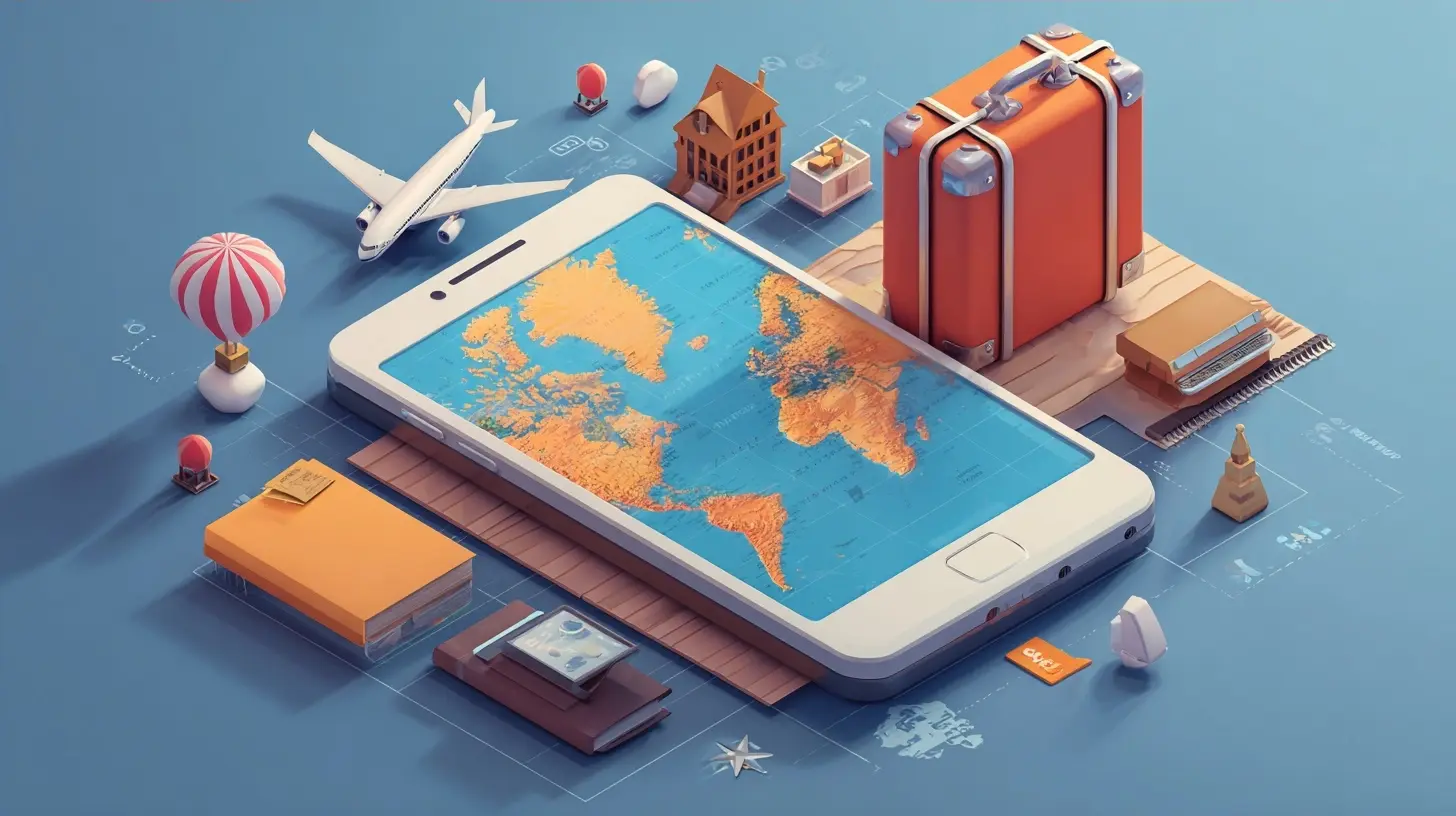
The static itinerary is dying. The old model involved researching your trip for weeks, printing out a day-by-day plan, and then feeling a quiet panic when the weather turned or a museum closed unexpectedly. By 2027, your phone will hold a living document that reshapes itself based on live conditions.Consider a concrete example. You are in Lisbon. Your plan for Tuesday is to visit a castle in the morning, then walk through the Alfama district, then catch a fado show in the evening. At 8 AM, your phone checks the weather forecast and sees rain coming in from the Atlantic by noon. It automatically suggests swapping the outdoor walking tour for the National Tile Museum, which is indoors and has excellent reviews for a rainy day. It also notices that the fado show you wanted is sold out, but a smaller venue three blocks away has two seats left. It books them, sends you a confirmation, and adjusts your walking route to include a famous pastry shop you mentioned liking on social media last year.
This is not magic. It is the integration of calendar data, weather APIs, ticketing platforms, and recommendation algorithms. The reason it works by 2027 is that the underlying systems finally talk to each other. The reason it fails is when you let it run on autopilot without setting constraints. If you do not tell the phone that you hate crowds, that you want to avoid tourist traps, or that you need a quiet hour every afternoon to recharge, it will optimize for efficiency instead of enjoyment. The smartest travelers will treat their phone like a well-trained assistant, not a decision maker. You set the values. It handles the logistics.
The Rise of the Travel Agent in Your Pocket
There is a common misconception that algorithms are neutral. They are not. A recommendation system reflects the data it was trained on, and most travel data comes from tourists who behave like tourists. By 2027, the best travel tools will let you tune the algorithm to your personal taste profile, not the aggregate preferences of millions of strangers.The shift is already visible in how music and video recommendations evolved. Early versions pushed the most popular content. Later versions learned your specific quirks. Travel is following the same curve. Your phone will know that you prefer boutique hotels over chains, that you like to walk everywhere even when transit is faster, that you would rather eat at a family-run taverna than a Michelin-starred restaurant, and that you find crowded markets stressful but empty churches fascinating.
The danger is over-personalization. If the algorithm only shows you places that match your established preferences, you stop discovering things that surprise you. The best travel tools will include a serendipity slider. Set it high when you want to wander into unknown neighborhoods. Set it low when you have three hours before a flight and need a reliable meal near the airport. The tool should offer options outside your comfort zone, but only when you signal openness to them.
This is where the human element still matters. An algorithm can tell you that a certain restaurant has high ratings. It cannot tell you that the owner is a retired fisherman who will spend an hour telling you stories about the coast if you show genuine curiosity. That kind of knowledge comes from human reviews, local forums, and personal networks. The best smartphone tools will aggregate those signals, but they will never replace the act of asking a bartender where they would eat on their day off. Use the phone to find candidates. Use your instincts to choose.
Smart Luggage and the End of Baggage Anxiety
The smart suitcase had a rough start. Early versions were heavy, expensive, and sometimes banned by airlines because of lithium battery restrictions. By 2027, the category matures in a different direction. The intelligence moves out of the bag and into the phone, which makes more sense anyway.Your phone already knows your flight number, your seat, and your destination. It will soon know where your bag is at every point in the journey. This is not about GPS tracking inside the suitcase, which has limited value in the cargo hold. It is about integration with airline baggage systems, which are finally sharing data in real time. You will get a notification when your bag is loaded onto the plane, when it lands, and when it is on the carousel. If it goes missing, you will have digital proof of its last known location, which speeds up the claims process significantly.
The practical advice for 2027 is to buy an Apple AirTag or the equivalent for every bag you check. The cost is trivial compared to the peace of mind. The tracking is not perfect, but it gives you a huge advantage when dealing with airline staff who are trained to say "we will look into it" and hope you go away. You can point to your phone and say, "My bag is in this building, on the third floor, near the west elevator." That changes the conversation.
A more subtle benefit is timing. When you know exactly when your bag will arrive, you can plan your exit from the airport. Instead of standing at the carousel for twenty minutes watching empty conveyor belt, you can grab a coffee and wait for the notification. Small gains, but they add up over a year of travel.
The Phone as Your Safety Net
Travel safety has always been about preparation. The smartphone will not prevent every problem, but it will dramatically improve your ability to respond when things go wrong. By 2027, the safety features become more proactive and less dependent on you remembering to press a button.Your phone will know your planned route. If you deviate from it significantly in an unfamiliar area at night, it will ask if you are okay. If you do not respond, it can share your location with a trusted contact. This is not surveillance. It is a gentle check-in that respects your autonomy while providing a safety net.
Medical emergencies are another area where the phone becomes essential. Your health records, allergies, blood type, and emergency contacts will be stored in an encrypted format that can be accessed by first responders even when the phone is locked. The technology exists today in limited form. By 2027, it will be standard across major health platforms. The key is setting it up before you leave home, not after you are lying in a hospital bed in a country where you do not speak the language.
The misconception is that these features require constant connectivity. They do not. The most important safety functions will work offline. Your phone can store your hotel address, the local emergency numbers, and your embassy contact information without any network access. Download offline maps of your destination before you travel. They work even in airplane mode. They have saved more travelers than any high-tech gadget.
Sustainable Travel Gets a Data Backbone
There is a lot of talk about sustainable travel, but most of it is vague marketing. By 2027, your phone will give you concrete data about the environmental impact of your choices, and that changes the nature of the decision.Consider a flight from London to Barcelona. A direct flight emits a certain amount of carbon per passenger. A connecting flight with a layover might emit more or less, depending on the aircraft and the route. Your phone will show you the difference. It will also show you the train option, including total travel time, cost, and emissions. You can then make an informed choice rather than guessing.
The same logic applies to accommodation. Hotels have wildly different energy footprints. A modern building with efficient heating and cooling can be greener than an older one, even if the older one has a "green" label. Your phone will aggregate data from energy monitors, building certifications, and utility records to give you a realistic picture. It will not tell you what to do. It will give you the numbers and let you decide.
The trap is eco-anxiety. If you obsess over every gram of carbon, travel becomes stressful and joyless. The smart approach is to focus on the biggest levers. Skip the short-haul flight when a train is reasonable. Stay longer in fewer places. Eat local food instead of imported products. The phone can help with all of this, but it should not turn your vacation into an audit.
Money Without Borders
Currency conversion is a solved problem. The bigger issue is fees, exchange rates, and the risk of carrying too much cash or too little. By 2027, your phone will handle this seamlessly, but only if you set up your accounts correctly.The best practice is to get a travel card with no foreign transaction fees and a competitive exchange rate. Link it to your phone's wallet. Use the card for everything, even small purchases. This gives you a digital record of every expense, which helps with budgeting and reimbursement. It also protects you from carrying large amounts of cash, which is a security risk in many destinations.
The subtle trick is to pay in the local currency whenever you are given the choice. Many merchants and ATMs offer to convert the charge to your home currency at a terrible rate. Always decline. Your phone will warn you when this happens, and it will show you the exact difference in cost. Over a two-week trip, this can save you a significant amount of money.
Another emerging trend is the use of stablecoins and digital currencies for cross-border payments. The technology is still maturing, and the regulatory landscape is uneven. By 2027, some travelers will use these tools for larger transactions, but the everyday spending will still flow through traditional card networks. Do not chase the hype. Use what works, and let the phone handle the complexity in the background.
The Human Element Remains the Point
It would be easy to read all of this and conclude that the future of travel is a fully automated experience where you simply show up and follow the prompts. That would be a mistake. The best travel has always been about the unexpected, the unplanned, the moments that no algorithm could predict.The smartphone's real value is not in removing uncertainty. It is in reducing the friction that surrounds uncertainty. When you do not have to worry about missing a train, losing your wallet, or getting hopelessly lost, you have more mental energy for the things that matter. You can say yes to an invitation from a stranger because you know your phone can get you back to your hotel. You can wander down an unmarked path because you know the offline map will guide you home. You can take a risk on a strange restaurant because you know the translation app can handle the menu.
By 2027, the travelers who benefit most will not be the ones with the newest phones or the most apps. They will be the ones who understand that the phone is a tool for enabling human connection, not replacing it. The technology gets smarter, but the goal stays the same. You travel to see the world, to meet people, to taste things you cannot get at home, and to come back with stories that do not fit into a notification.
Use the phone to make that possible. Then put it in your pocket and look up.
all images in this post were generated using AI tools
Category:
Smartphone TipsAuthor:

Jerry Graham
Discussion
rate this article
2 comments
Nyxaris Clark
Smartphones are already transforming travel, but by 2027, I expect even deeper integration of AI, real-time updates, and personalized experiences. It's exciting to think about the possibilities ahead.
October 12, 2026 at 12:03 PM
Jerry Graham
Absolutely! The potential for smartphones to enhance travel experiences is immense. I can't wait to see how AI and real-time updates shape our journeys by 2027.
Izaak Cain
Smartphones: your ultimate travel companion by 2027.
September 11, 2026 at 10:28 AM
Jerry Graham
Thanks for the comment! By 2027, smartphones will indeed enhance our travel experiences in ways we can't yet imagine. Exciting times ahead!