VR Headsets for Space Exploration: Bringing the Cosmos to You
4 June 2026
When you hear the word “space,” what’s the first thing that pops into your head? Mysterious black skies, twinkling stars, maybe even astronauts floating helplessly in zero gravity. But let’s be honest—unless you’re training at NASA or SpaceX, you’re probably never going to slip on a space suit and hop aboard a shuttle. That’s where Virtual Reality (VR) swoops in like a superhero. VR headsets are flipping the script on space exploration, bringing the stars, planets, and distant galaxies right into your living room.
Let’s talk about how VR is changing the way we experience the cosmos—and why you might want to strap in and take the ride.
Why Virtual Reality Is a Game Changer for Space Exploration
Okay, before we go any further, let’s get one thing straight: space isn’t just for astronauts anymore. With VR tech advancing at warp speed, anyone with a decent headset and an internet connection can take a front-row seat on a journey through the universe.Immersion Like Never Before
Remember those flat 2D planetarium movies? Cute, but they're basically space for toddlers now. VR headsets let you dive head-first into a 360-degree cosmic adventure. You don’t just watch Mars—you walk on it. You don’t just look at a black hole—you float near it (don’t worry, you won’t get sucked in... probably).The immersive nature of VR makes it feel like you’re experiencing space with all your senses… minus the need to breathe through a tube.
Combating the "Accessibility Barrier"
Let’s face it, space travel is ridiculously expensive and reserved for a select few. But VR knocks down those barriers like a meteor hitting Earth (okay, a little dramatic—but you get the idea). Now, students, teachers, researchers, and even just curious folks can roam around the solar system without dropping millions or risking their lives.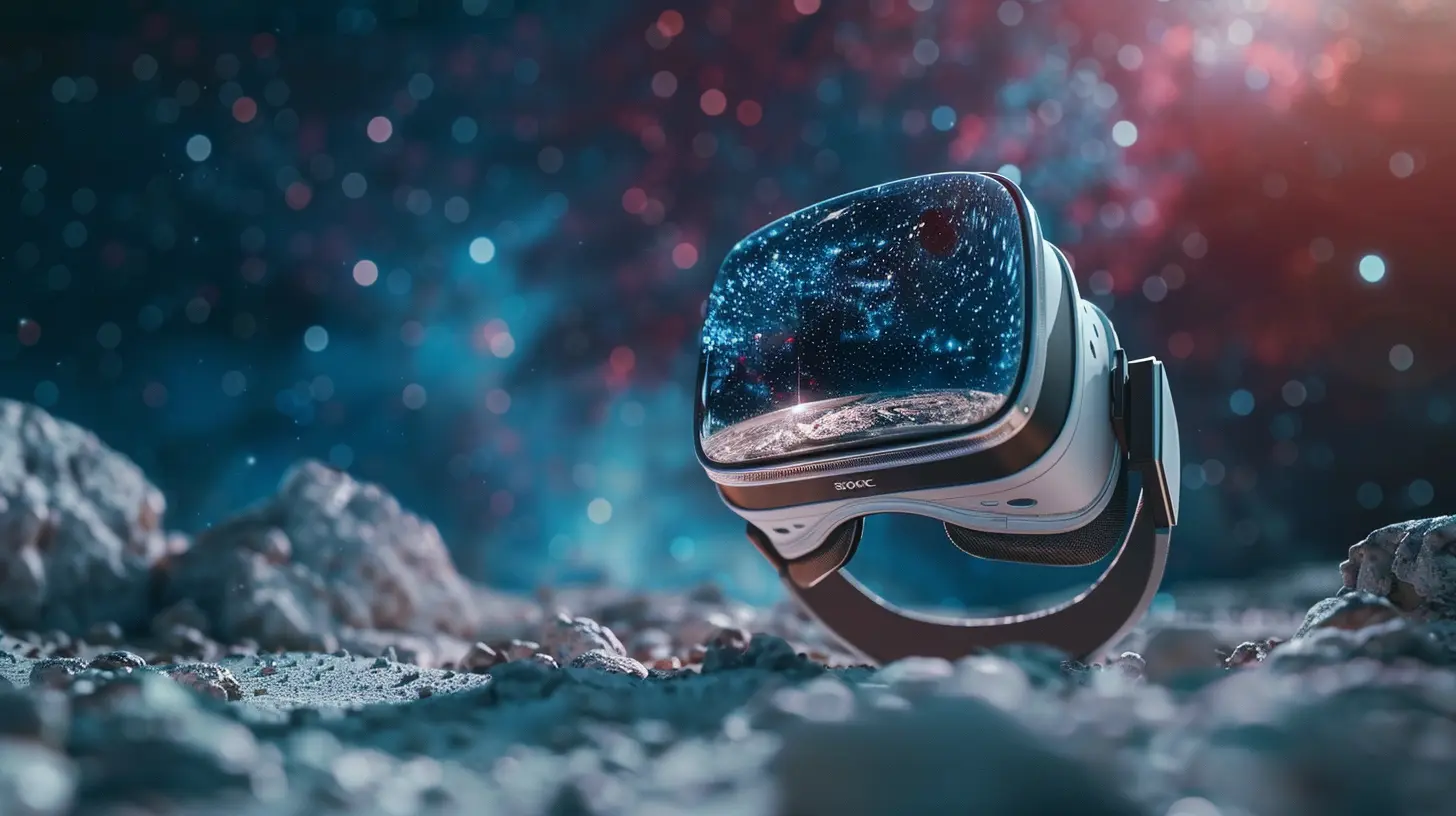
What Makes a VR Headset Ideal for Space Exploration?
Not all VR headsets are created equal. You wouldn’t bring a butter knife to a sword fight, right? So if you’re planning to venture into the virtual void of space, you’ll need gear that can handle the ride.Resolution and Graphic Quality
Space is beautiful. That’s kind of the whole point, isn’t it? From Saturn’s rings to the dusty plains of Mars, you’ll want every detail to pop. A high-resolution display—4K or higher—is a must if you want to truly appreciate the grandeur of the universe.Field of View (FOV)
A wide field of view is key to making you feel like you're really “out there.” A narrow view feels like peeking through a straw. But with a 110-degree FOV or larger, your peripheral vision gets involved, creating that all-important sense of scale and depth.Comfort and Weight
You’re going to be floating through space for a while—make sure your headset doesn't make you feel like your neck's hugging a brick. Look for headsets with adjustable straps, soft padding, and lightweight designs. Comfort matters more than you think, especially during longer sessions.Interactivity and Controls
Exploration is more fun when you can actually do stuff. Touch controllers, hand tracking, voice commands—good VR headsets come loaded with features that let you open doors on a spaceship, initiate rocket launches, or zoom in on craters on the Moon.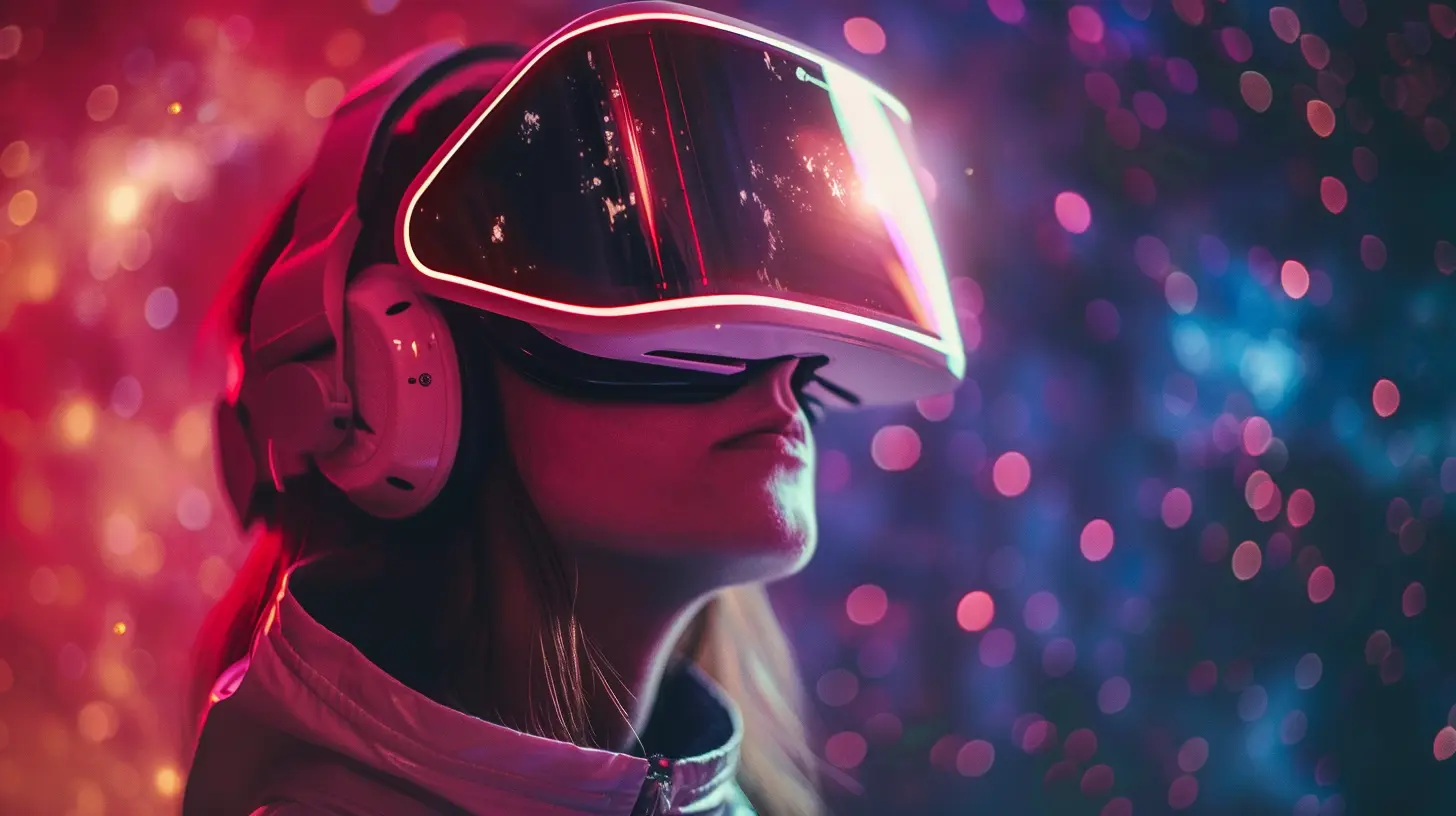
Top VR Headsets for Cosmic Adventures
Alright, enough theory. Let’s beam down to the real deal. Here are some of the best VR headsets that’ll launch your space exploration dreams into orbit.1. Meta Quest 3
- Resolution: 2064 x 2208 pixels per eye- FOV: Around 110°
- Price: Mid-range
- Pros: Standalone (no PC required), mixed reality features, comfort
- Cons: Less powerful than tethered headsets
Meta’s Quest 3 is the Golden Retriever of VR headsets—friendly, versatile, and ready to go. With sharp visuals and no need for complicated wires, it's perfect for casual stargazers and hardcore galaxy geeks alike.
2. Valve Index
- Resolution: 1440 x 1600 pixels per eye- FOV: Up to 130°
- Price: On the expensive side
- Pros: Fluid motion tracking, great audio, incredible immersion
- Cons: Requires a beefy PC and external sensors
This one’s for the pros. If you want to get as close as you can to being in space—without leaving your house—the Index is about as close as it gets.
3. PlayStation VR2
- Resolution: 2000 x 2040 pixels per eye- FOV: Around 110°
- Price: Mid-high range
- Pros: Built for gaming, beautiful displays, haptic feedback
- Cons: Only works with PlayStation 5
PlayStation VR2 is proof that stunning space adventures don’t have to come from a dedicated PC rig. Great for gamers who want to mix sci-fi with fun.
The Best Space Exploration VR Experiences
What’s a headset without the right content? Lucky for you, the VR galaxy is bursting with apps, games, and simulations that’ll leave you star-struck.Universe Sandbox
Want to control the cosmos? Go full God mode with Universe Sandbox. Smash two galaxies together just for fun or create your own solar system from scratch. It’s a physics simulator on steroids—and yes, it’s mind-blowingly cool.Mission: ISS
Ever wondered what it’s like aboard the International Space Station? This free VR experience, made in collaboration with NASA, lets you float weightlessly through the ISS and even participate in spacewalks. It’s educational and awe-inspiring.Titans of Space PLUS
Strap into a tiny spaceship and get a guided tour of the solar system. The scale in this app is wild—you’ll feel like an ant next to Jupiter. Great for learners and anyone who wants to feel tiny in the best way possible.Star Chart VR
Star Chart brings astronomy to life with real-time planetary data. It’s like holding a telescope to the sky, but way cooler. You can view constellations, travel through time, and even land on different celestial bodies.Why This Matters: VR's Role in Education and Research
Sure, floating around Saturn is fun, but VR’s not just about the wow factor. It’s already being used in schools and universities to teach astronomy, physics, and engineering. Imagine a class where instead of reading about gravitational pull, you feel it in action while orbiting around a planet.Astronaut Training
Believe it or not, real astronauts use VR too. NASA and other space agencies use VR simulations to prepare crews for missions, train for emergency procedures, and even help with dealing with the mental stress of isolation in space.Scientific Research
Researchers are using VR to create simulations of planetary systems, black holes, and other phenomena. It helps them visualize complex data and communicate their findings to non-scientists in a more engaging (and less boring) way.The Future of VR and Space Exploration
We’ve only scratched the surface. As VR hardware and software continue to evolve, so will your space-traveling potential.Mixed Reality Meets Space
With the rise of Mixed Reality (MR), headsets are starting to blend physical and digital elements. Imagine building a spaceship model in your living room—then watching it virtually launch into orbit from your coffee table. That’s where we’re headed.Haptic Feedback and Full-Body Tracking
Future VR systems will let you feel the rumble of a rocket launch or the cold emptiness of space through haptic suits. Add full-body tracking, and now you’re not just seeing and hearing space—you’re physically experiencing it.AI Companions and Virtual Missions
Think HAL 9000, but less creepy. AI bots in VR space apps could assist you with information, guide your missions, and even help research cosmic phenomena—all without threatening to lock you out of the airlock.Final Thoughts: Should You Try It?
In one word: absolutely.You don’t need to be a scientist or a gamer to get something out of VR space exploration. Whether you're a curious student, a parent looking to inspire your kid, or someone who just wants to "get away"—trust me, there’s no vacation spot cooler than the rings of Saturn.
VR headsets are turning science fiction into science reality. They’re not just toys; they’re portals. So if you’ve ever dreamed of seeing Earth from orbit or walking on the Moon, now’s your chance. You don’t need a spaceship—you just need a headset and a sense of wonder.
So grab your gear, adjust your headset, and get ready. The stars are waiting.
all images in this post were generated using AI tools
Category:
Vr HeadsetsAuthor:

Jerry Graham
Discussion
rate this article
1 comments
Callie Ward
This article brilliantly highlights how VR headsets can transform our understanding of space. By simulating cosmic environments, they provide an immersive experience that not only inspires curiosity but also enhances scientific education and accessibility for all.
June 10, 2026 at 10:28 AM
Jerry Graham
Thank you! I'm glad you found the article insightful. VR truly opens up new ways to explore and understand the universe.