The Role of VR Headsets in Mental Health Therapy
15 June 2026
Imagine strapping on a headset and stepping into a world where your fears are conquerable, your anxiety fades, and healing begins—not in a sterile white room, but in a lush forest, a cozy cabin, or even outer space. Sounds surreal, right? But it’s happening right now. Virtual Reality (VR) is no longer just for gamers and tech geeks. It’s becoming one of the most promising tools in mental health therapy.
Let’s take a deep dive into how something so futuristic is reshaping the very human struggle with mental wellness.
A Quick Glimpse into Virtual Reality
Before we get too deep, let’s get on the same page—what exactly is VR?Virtual Reality is a simulated experience that can be similar to or completely different from the real world. You slip on a headset, and suddenly you're not in your living room anymore. You're at the beach, in front of a crowd giving a TED Talk, or standing on the edge of a mountain (hopefully safely!).
Now imagine using that power to rewire the brain, reshape thought patterns, and even tackle deep-rooted emotional trauma.
Crazy? Maybe. Effective? Absolutely.
Mental Health: The Invisible Battlefield
Mental health is complicated. Unlike physical health, you can’t always see it. You can’t put a cast on anxiety or take an X-ray of depression. But that doesn’t mean it’s not real or brutal. Millions of people wrestle with mental health issues every day—anxiety, PTSD, phobias, depression, the list goes on.Traditional therapy methods like cognitive behavioral therapy (CBT), exposure therapy, and talk therapy are still gold standards. But some people hit walls. Progress stalls, emotions overwhelm, and real-life exposure isn't always safe or practical.
Enter VR headsets.
VR Therapy: When Science Meets Sci-Fi
The genius of VR in therapy lies in its ability to simulate. You get the benefits of real-world exposure without actual danger or discomfort. And it's not just a gimmick—it’s backed by growing stacks of research.Let’s unpack how this virtual toolbox is helping therapists and individuals tackle mental health from a whole new angle.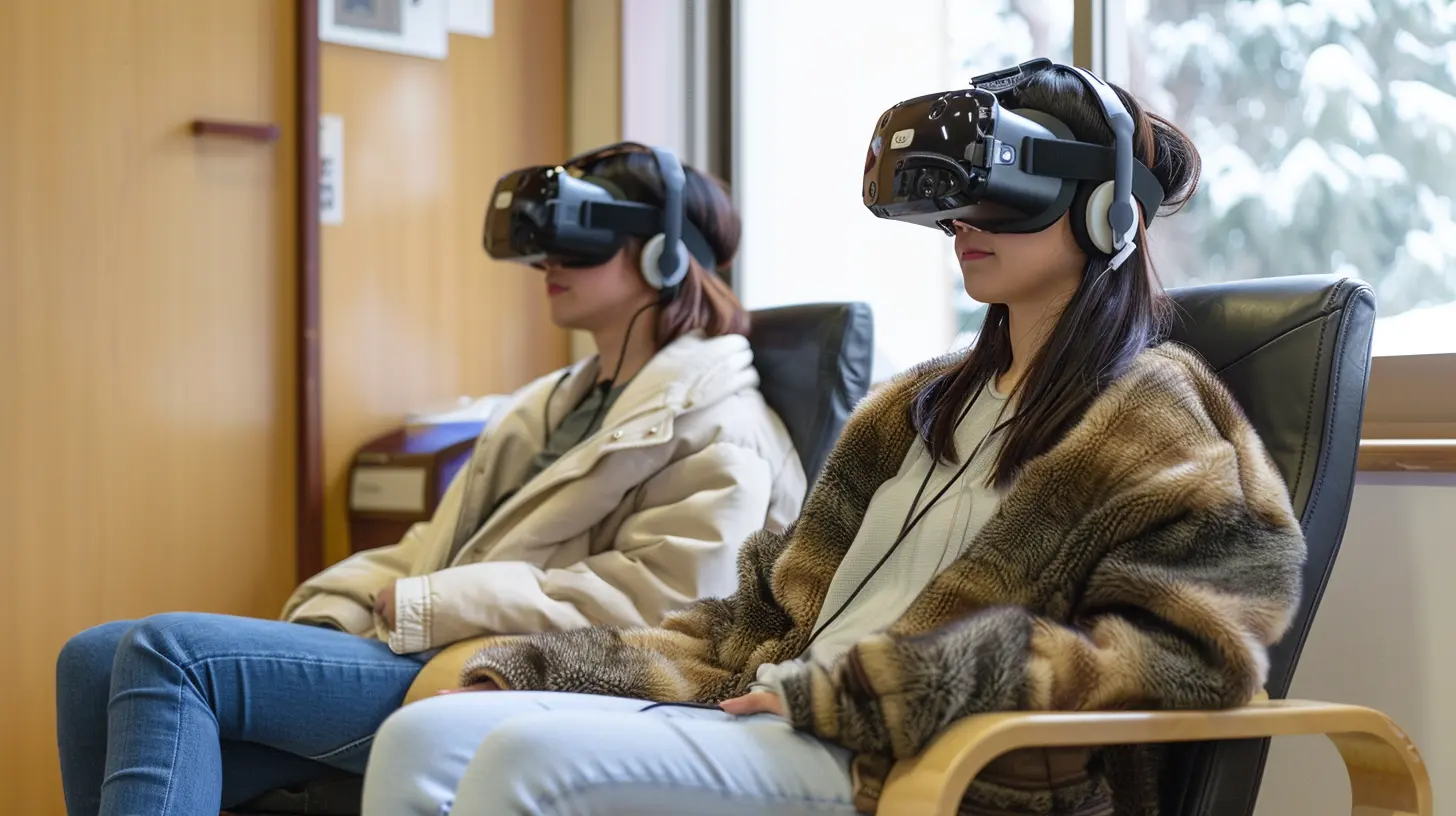
1. Exposure Therapy Reinvented
Exposure therapy can be terrifying. If you have a phobia of flying, you're not exactly thrilled to hop on a 747 as part of your treatment. That’s where VR changes the game.With a VR headset, therapists can safely immerse patients in controlled simulations—flying, public speaking, heights, social situations—you name it. And they can dial the intensity up or down based on how you're feeling. It's like exposure therapy with a pause button.
? Imagine: You’re afraid of dogs. In VR, you pet a calm dog in a park. You practice breathing. Your brain learns the dog isn’t dangerous. Next level: the dog barks. You stay calm. This progression rewires your fear response.
2. PTSD and Trauma Healing
For veterans, survivors of abuse, or those who've faced severe trauma, revisiting the experience is often necessary for healing—but incredibly painful.VR therapy allows for customized reliving experiences under controlled, therapeutic conditions. Therapists use VR to recreate scenes that trigger trauma but do so in a way that allows emotional processing and eventual desensitization.
Think of it as emotional time travel. You revisit the wound, but this time you have a guide, tools, and a virtual safety net. It’s still hard—but possible.
3. Calming Anxiety and Training the Brain
Anxiety is often described as the brain playing scary movies on loop. So what if, instead, you could play a calming one?VR can transport patients to peaceful environments: a beach at sunset, a forest with birds chirping, or a quiet meditation room. With guided breathing and mindfulness sessions built into the VR experience, users can retrain their physiological responses to stress.
It’s like hitting the mute button on anxiety’s constant chatter.
4. Treating Social Anxiety with Virtual Crowds
Social anxiety can make even ordering coffee feel like a nightmare. VR lets therapists simulate social interactions in a safe, repeatable way.You can practice job interviews, dating scenarios, public speaking—over and over again until your brain realizes: “Hey, this isn’t so scary!”
Plus, VR allows people to fail safely. Mess up a speech? No one laughs. You reset, learn, and try again. The confidence boost is real—and it carries into the real world.
5. Cognitive Behavioral Therapy (CBT) with a Twist
CBT is one of the most effective forms of talk therapy. It focuses on identifying and reshaping negative thought patterns.Here’s where VR steps it up: imagine you're walking through your “anxious” world, spotting thought bubbles like “I can’t do this” floating beside you. You reach out, pop them, and replace them with truths like “I am capable.”
This kind of gamified therapy makes CBT concepts more tangible—and dare I say, even fun?
6. Empathy and Understanding for Loved Ones
VR therapy isn’t just helping patients. It’s helping their loved ones too.Some VR programs simulate what it’s like to live with schizophrenia or severe anxiety. That means families and caregivers can literally walk in someone else's shoes—feeling disoriented by voices, overwhelmed by crowds, or paralyzed by a wave of fear.
This "empathy training" is breaking down walls and building bridges where misunderstanding once stood.
7. Remote Therapy and Accessibility
Here’s another perk—VR therapy is going remote.You can now attend sessions from your home using a VR headset. This boosts access for people in rural areas, those with mobility issues, or anyone who feels stigma walking into a therapist’s office.
With remote capabilities, therapists can guide patients through VR sessions in real-time or let them practice exercises between visits.
It brings therapy to your living room. Literally.
Real Results: Is VR Therapy Actually Working?
Let’s get real—does any of this actually work?Yes, and the numbers speak volumes:
- A study in The Lancet Psychiatry found that VR exposure therapy significantly reduced fear of heights.
- Veterans using VR for PTSD showed measurable improvements in symptoms.
- A clinical trial by Oxford University found VR-based treatment to be effective for people with psychosis and social withdrawal.
Of course, it’s not a cure-all. VR is a tool, not a replacement for human connection or professional care. But as a complementary method, it’s proving to be incredibly powerful.
But Is VR Safe for Mental Health?
Short answer: yes, but with a few things to keep in mind.VR therapy should always be guided by trained professionals when addressing serious conditions like PTSD or trauma. Overexposure or poorly designed simulations can do more harm than good.
Also, some people experience motion sickness or dizziness, especially with longer sessions. But as tech improves and becomes more intuitive, these issues are becoming less common.
The Future Is (Almost) Here
As VR technology continues to evolve, the possibilities for mental health therapy are expanding fast.We’re talking AI-driven avatars, biometric feedback, and perhaps one day—virtual therapists powered by natural language processing.
It’s not just about gamifying therapy—it’s about creating immersive, personalized healing experiences that can meet people where they are, mentally and physically.
Should You Try VR Therapy?
So, you’re probably wondering—should I give it a shot?If you’re dealing with anxiety, phobias, trauma, or just want to explore new ways to improve your mental well-being, talk to your therapist. Chances are, they’re already exploring this tech or can refer you to someone who is.
And if you’re a therapist? It might be time to invest in a headset and take your practice to a whole new level—literally.
Final Thoughts
The idea of using VR headsets in mental health therapy might once have sounded like something out of a Black Mirror episode. But today, it’s real, it’s effective, and it’s revolutionizing how we approach one of the most complex parts of human life—our minds.It’s like giving your brain a pair of wings. The question is, are you ready to fly?
all images in this post were generated using AI tools
Category:
Vr HeadsetsAuthor:

Jerry Graham
Discussion
rate this article
1 comments
Sebastian Gates
VR offers new hope for mental health therapy.
June 17, 2026 at 10:56 AM
Jerry Graham
Absolutely, VR opens up innovative pathways for therapy, making treatment more engaging and accessible for many.