Why Sustainability Tech Is the Future of E-Commerce
30 August 2026
The e-commerce industry has spent the last two decades optimizing for one thing: speed. Faster checkout, faster shipping, faster delivery. Every friction point was removed, every second shaved off the path to purchase. The result is a shopping experience that feels almost effortless, but the hidden cost of that convenience is mounting. Warehouses run around the clock, fleets of delivery vehicles crisscross cities, and millions of packages move through systems designed for throughput, not for the planet.
The next wave of e-commerce growth will not be driven by making things faster. It will be driven by making things smarter about the resources they consume. Sustainability technology is not a marketing angle or a compliance checkbox. It is becoming the operational backbone of online retail, and the businesses that treat it as such will be the ones that survive the next decade. This is not about being green for the sake of being green. It is about building systems that are more efficient, more transparent, and more resilient, and those qualities turn out to be good for both the environment and the bottom line.

The Real Problem: It Is Not Just the Packaging
When most people think about e-commerce and the environment, they picture cardboard boxes and plastic bubble wrap. That is the visible part, but it is a small fraction of the actual footprint. The bigger issues are in the infrastructure that makes the sale possible in the first place.Think about a typical order. The product sits in a warehouse that is lit, heated, and cooled. It is picked by a worker or a robot, packed into a box that is often larger than necessary, and then handed to a carrier. That carrier may consolidate the package with others on a truck that drives a route optimized by software. The last mile, the final stretch from the local depot to the customer's door, is the most expensive and the most polluting part of the entire journey. It is also the part that customers feel most directly, and the part where they are most likely to notice inefficiency.
The problem is that most e-commerce systems were designed without considering the full lifecycle of a product. They were designed to move units, not to minimize energy use or waste. The result is a system that works, but only because it externalizes the environmental costs. As regulations tighten and consumer expectations shift, those externalized costs are becoming internal ones. Carbon taxes, extended producer responsibility laws, and mandatory reporting requirements are all on the table in various markets. When those costs land on the balance sheet, the economics of e-commerce change dramatically.
That is where technology comes in, not as a patch, but as a redesign.
Data Is the Missing Ingredient
The most important sustainability tool in e-commerce is not a new material or a new fuel. It is data. Most online retailers do not actually know the carbon footprint of a single order. They might know the weight of the package and the distance it traveled, but they do not know the energy mix of the warehouse, the efficiency of the delivery vehicle, or the difference between a return that is resold and one that is landfilled.Without that data, any sustainability initiative is guesswork. You cannot reduce what you cannot measure. The first step for any serious e-commerce operation is to build a data layer that tracks the environmental impact of each order, from the moment a product is stored to the moment it reaches the customer's door. This is not as hard as it sounds, but it requires a shift in mindset.
Modern enterprise resource planning systems and order management platforms can be configured to capture sustainability metrics alongside traditional business metrics. The key is to integrate this data into the same dashboards that managers already use. If the shipping dashboard shows not just cost and delivery time but also emissions per package, decisions start to change naturally. A manager who sees that a particular carrier has a 15 percent higher emissions rate for the same price will start asking why.
The tricky part is that data quality varies widely. Some carriers provide detailed emissions reports. Others provide nothing. Some product databases have lifecycle assessment data. Others do not. The practical approach is to start with estimates and refine them over time. An estimate based on distance and weight is better than no data at all. As the data improves, the decisions improve.

The Warehouse as a Microgrid
Warehouses are energy hogs. They are large, open spaces that need lighting, climate control, and power for conveyor belts, sorting machines, and charging stations for forklifts. In many cases, the energy bill is the second largest operating cost after labor. This makes warehouses a prime target for sustainability technology that also cuts costs.The most effective approach is not simply to buy renewable energy from the grid, but to turn the warehouse into a microgrid. This means installing solar panels on the roof, battery storage on site, and software that manages when energy is drawn from the grid, when it is stored, and when it is used. The warehouse becomes a node in the energy system rather than a passive consumer.
The economics of this are compelling in regions with high electricity prices or time-of-use tariffs. A warehouse with a large battery can charge it overnight when electricity is cheap and discharge it during peak afternoon hours when prices spike. That same battery can also provide backup power during outages, which is a significant operational benefit. For e-commerce companies, a warehouse that can keep operating during a grid failure is a warehouse that does not lose money on every minute of downtime.
The trade-off is the upfront capital. Solar panels and batteries are not cheap, and the payback period can be five to ten years depending on the location and the local utility rates. That is a long time for a fast-moving e-commerce company. However, there are financing models that change the calculation. Power purchase agreements, where a third party owns and operates the solar system and sells the electricity back to the warehouse at a fixed rate, remove the capital burden. The warehouse gets predictable energy costs and a lower carbon footprint, and the third party gets a long-term revenue stream.
The mistake many companies make is treating this as an all-or-nothing decision. They either install a full solar array or do nothing. The smarter approach is to start with energy efficiency measures that have a short payback period, such as LED lighting, better insulation, and variable speed motors on conveyor systems. Those savings can then fund the larger investments in solar and storage.

The Last Mile Is the Hardest Mile
The last mile is where e-commerce sustainability gets genuinely difficult. It is the most energy-intensive part of the supply chain, and it is the hardest to optimize because it is the most variable. A delivery truck may be fully loaded for the first half of its route and nearly empty for the second half. Traffic conditions change daily. Customer availability changes hourly.There is no single silver bullet for the last mile, but there are several technologies that, when combined, make a meaningful difference. Route optimization software is the most mature of these. Modern routing algorithms can account for traffic patterns, delivery windows, vehicle capacity, and even the energy profile of the vehicle itself. For a fleet of electric vehicles, the routing software must also consider charging station locations and battery state of charge. A route that is optimal for a diesel truck is often not optimal for an electric one.
Electric delivery vans are becoming a practical option for many urban routes. The range is sufficient for most daily routes, and the maintenance costs are lower because there are fewer moving parts. The challenge is charging infrastructure. A fleet of fifty electric vans needs a charging depot, and that depot needs sufficient electrical capacity. In many cities, the local grid infrastructure cannot handle a large fleet charging simultaneously. This is a real constraint, and it is why some companies are staggering charging times overnight and using software to balance the load.
Another approach that is gaining traction is the micro-fulfillment center. These are small warehouses located in urban areas, often in converted retail spaces or parking garages. They stock only the fastest-moving items, and they allow for delivery within a few hours using cargo bikes or small electric vehicles. The trade-off is that micro-fulfillment centers increase the cost per unit because they are smaller and less efficient than large distribution centers. But they dramatically reduce the distance traveled for the last mile, which cuts emissions and improves delivery speed. For products that are high-turnover and low-margin, the economics can work.
The key insight is that there is no one-size-fits-all last-mile solution. A national e-commerce company needs a mix of delivery methods, and the mix should change based on the density of the area, the type of product, and the customer's delivery preferences. The technology that enables this is the orchestration layer, the software that decides which orders go to which fulfillment center and which delivery method to use. This is where the real gains are made.
Returns Are the Hidden Leak
Everyone talks about shipping emissions, but returns are a much bigger problem than most people realize. In the United States, return rates for online purchases are around 20 to 30 percent, and for apparel, they can be much higher. Each return involves a reverse shipment, an inspection, a repackaging, and often a discount on the resale price. In many cases, returned items end up in landfills because the cost of restocking them is higher than the value of the product.Sustainability technology is starting to address this from two angles: prevention and processing.
Prevention means giving customers better information before they buy. This is where augmented reality and virtual fitting technology come in. A customer who can see how a piece of furniture looks in their living room, or how a pair of shoes fits on their foot, is less likely to order the wrong size or color. This reduces the return rate, which reduces everything downstream. The technology is not perfect, and it does not work for every product category, but for high-return categories like apparel and home goods, it is worth the investment.
Processing means making the reverse logistics chain more efficient. The goal is to get returned items back into inventory as quickly as possible, or to route them to secondary markets without unnecessary handling. Software that automatically assesses the condition of a returned item and decides whether to restock it, refurbish it, or liquidate it can save significant time and money. The alternative, manual inspection, is slow and inconsistent.
The trade-off here is between customer experience and sustainability. The most sustainable option is to discourage returns altogether, perhaps by charging for returns or offering store credit instead of a refund. But that approach often drives customers to competitors. The better approach is to make the return process easier for the customer, so they do not feel the need to order multiple sizes or colors "just in case." This seems counterintuitive, but a frictionless return process actually reduces the number of items ordered speculatively.
Transparency as a Competitive Weapon
Consumers are increasingly curious about the environmental impact of their purchases, but they are also skeptical of green claims. This is where blockchain and other distributed ledger technologies have a role, though not the role that early hype suggested. The idea is to create an immutable record of a product's journey from raw material to final delivery. That record can include certifications, carbon offsets, and energy usage data.The reality is that blockchain is overkill for most e-commerce sustainability tracking. A simple shared database with access controls can do the job for most supply chains. The value is not in the technology itself, but in the transparency it enables. A customer who can scan a QR code on a product page and see that the item was made in a factory powered by renewable energy, shipped via an electric truck, and packed in recycled materials is more likely to trust the brand.
The challenge is that transparency cuts both ways. If a company publishes its emissions data, it is also publishing its weaknesses. A competitor can see where the inefficiencies are. This is why many companies are hesitant to share detailed data. The counterargument is that customers reward honesty, and that the companies that are transparent now will be seen as leaders as regulations tighten.
The practical advice is to start with a narrow set of claims that you can back up with data. Do not claim your entire supply chain is carbon neutral if you have only offset the last mile. Instead, be specific. Say that your packaging is 80 percent recycled content. Say that your delivery fleet in a particular city is fully electric. These specific, verifiable claims build trust. Vague claims build skepticism.
The Role of Regulation and Standards
It would be naive to talk about sustainability tech without mentioning regulation. The regulatory environment is shifting quickly, and e-commerce companies need to be prepared. The European Union's Corporate Sustainability Reporting Directive requires large companies to report on their environmental impact in a standardized way. Similar rules are being considered in other jurisdictions.The implication is that sustainability reporting will become a legal requirement, not a voluntary initiative. This means the data infrastructure that we discussed earlier becomes a compliance necessity, not just a best practice. Companies that have already built their data systems will have a head start. Those that have not will be scrambling to catch up, and that scramble will be expensive and error-prone.
There is also a growing movement toward product-level carbon labeling. Some retailers are starting to show the carbon footprint of individual products on their product pages, similar to how nutritional information is displayed on food. This is still early, and there is no standard methodology, but it is coming. When it does, the companies that have accurate data will be able to comply easily. Those that do not will have to make up numbers, which is a dangerous position to be in.
The best approach is to treat regulation as a floor, not a ceiling. Comply with what is required, but also build the systems that give you a genuine understanding of your impact. The companies that do this will be able to respond to new rules quickly, and they will be able to use their data to make better business decisions, not just to file reports.
Common Mistakes and How to Avoid Them
There are several mistakes that e-commerce companies make when they start down the sustainability path. The first is greenwashing, which is making claims that are technically true but misleading. For example, a company might say its packaging is "eco-friendly" when it is simply slightly thinner than before. Customers see through this, and the backlash can be severe.The second mistake is focusing on one metric at the expense of others. A company might reduce its packaging waste by using lighter materials, but those materials may not be recyclable, or they may require more energy to produce. The net effect is a wash. The solution is to look at the full lifecycle of the product and the packaging, not just one dimension.
The third mistake is treating sustainability as a separate project rather than an integrated part of operations. If the sustainability team is isolated from the logistics team, the sustainability initiatives will fail. The technology needs to be embedded in the daily workflow. The shipping manager needs to see emissions data in the same dashboard as cost data. The warehouse manager needs to see energy usage in the same report as throughput.
The fourth mistake is waiting for perfect data before taking action. The data will never be perfect. Start with estimates, refine them over time, and make decisions based on the best available information. A decision made with 80 percent accurate data is better than a decision delayed until the data is 100 percent accurate, which will never happen.
What the Future Looks Like
In the next five to ten years, the e-commerce landscape will look different. Delivery will be more localized, with micro-fulfillment centers in every major city. Fleets will be mostly electric, and charging infrastructure will be as common as gas stations are today. Warehouses will be energy producers as much as consumers. Returns will be a fraction of what they are today, thanks to better product visualization and smarter reverse logistics.The technology to get there exists today. The bottleneck is not technical, it is organizational. Companies need to make sustainability a core operational principle, not a side initiative. They need to invest in data infrastructure, train their teams, and be willing to make trade-offs that favor long-term resilience over short-term convenience.
The companies that do this will find that sustainability is not a cost center. It is a source of efficiency. Lower energy bills, fewer returns, less waste, and more loyal customers. The companies that ignore it will find themselves paying more for energy, facing regulatory fines, and losing customers to competitors who can demonstrate genuine environmental responsibility.
The future of e-commerce is not just about selling more. It is about selling smarter. And selling smarter means using technology to understand and minimize the impact of every single order. That is the future, and it is already here.
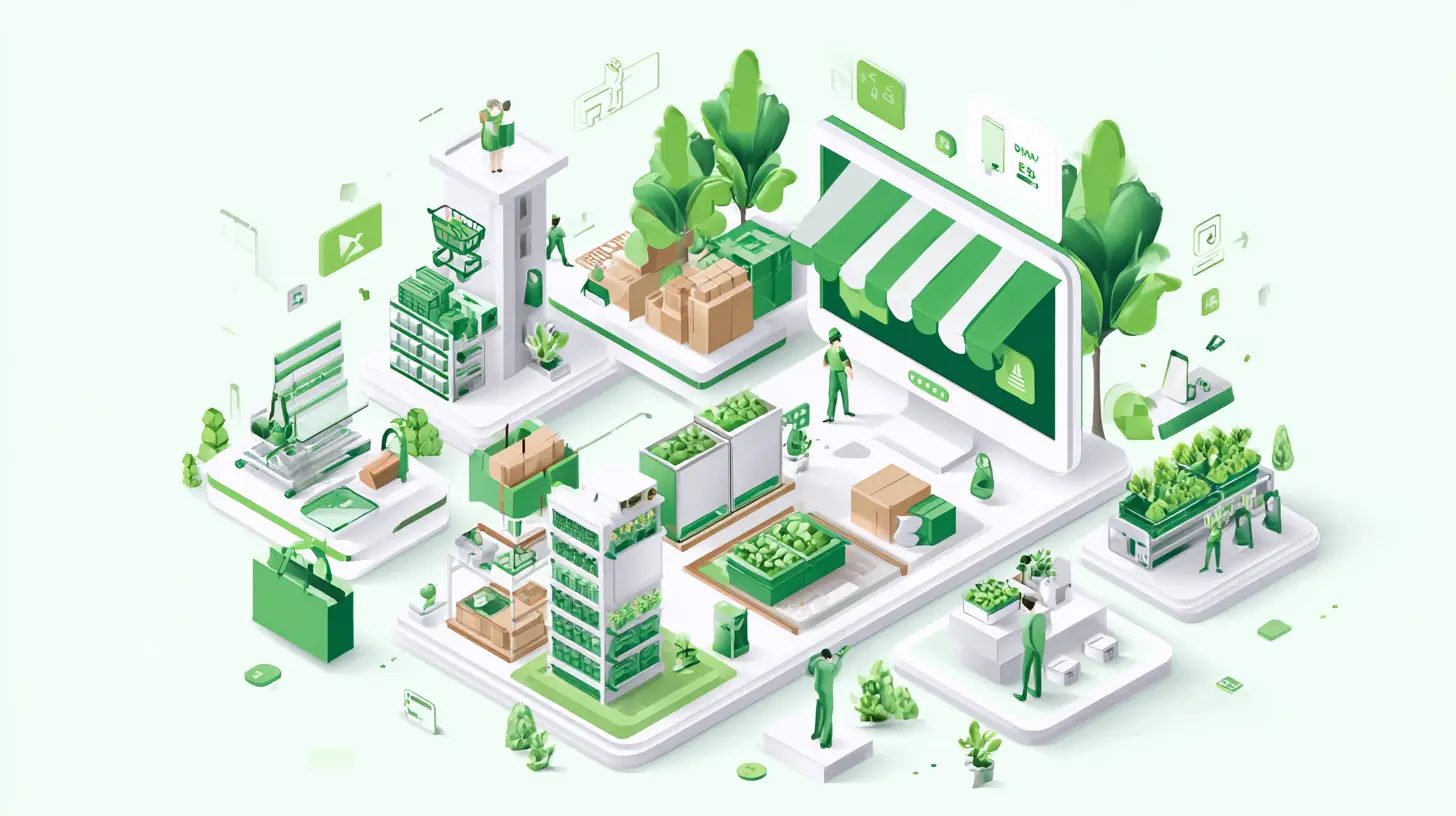
all images in this post were generated using AI tools
Category:
E Commerce TechnologyAuthor:

Jerry Graham
Discussion
rate this article
2 comments
Macey Spencer
The integration of sustainability tech in e-commerce is crucial for addressing environmental challenges. Companies prioritizing eco-friendly practices not only enhance their brand image but also meet the growing consumer demand for responsible shopping options. This shift is not merely a trend.
October 1, 2026 at 3:32 AM
Jerry Graham
I completely agree. Embracing sustainability tech is essential for e-commerce to thrive and resonate with conscious consumers. It's about making a lasting impact, not just following a trend.
Nyari Gates
This article highlights a crucial shift in e-commerce. Embracing sustainability tech not only addresses environmental concerns but also resonates with consumers' values. It's an exciting time for innovation that aligns profit with purpose, paving the way for a healthier planet.
September 16, 2026 at 1:01 PM
Jerry Graham
Thank you for your thoughtful comment! I agree, the intersection of sustainability and e-commerce is truly transformative. It's inspiring to see how innovation can drive both profit and positive change.