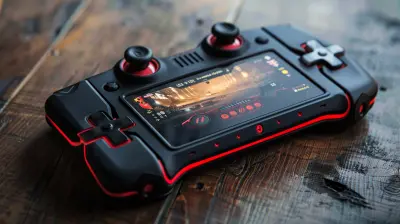
The Best VR Headsets for Flight Simulators: Take to the Skies
17 July 2026
Have you ever dreamed of flying your own plane? Of soaring through fluffy white clouds or zooming through canyons like a top gun pilot? Well, you don’t need a pilot’s license or even a plane anymore. Thanks to virtual reality (VR), you can take off, cruise, and land—all from the comfort of your gaming chair.
But here’s the thing: not all VR headsets are created equal, especially when we're talking about flight simulators. You need a headset that delivers crisp visuals, smooth performance, low latency, and immersive audio. In other words, the kind of VR experience that makes you forget you’re not actually in a cockpit.
In this article, we’ll walk you through the best VR headsets for flight simulators in 2024. Whether you’re into Microsoft Flight Simulator, X-Plane 12, or DCS World, we’ve got something in store for every kind of virtual pilot. Buckle up!
Why VR Is a Game-Changer for Flight Simulators
Let’s be real—flight simulators are already incredibly detailed. But add VR into the mix, and it's like switching from a black-and-white TV to IMAX 3D. You’re not watching a plane; you’re in the plane. You can actually look around the cockpit, track other aircraft, and get a true sense of altitude and distance.It’s not just about visuals either. The feeling of depth and space VR provides helps with spatial awareness and handling—skills that even real-world pilots practice in sims. And let’s not forget that level of immersion just makes flying insanely fun!
So yeah, VR + flight sim = next-level experience.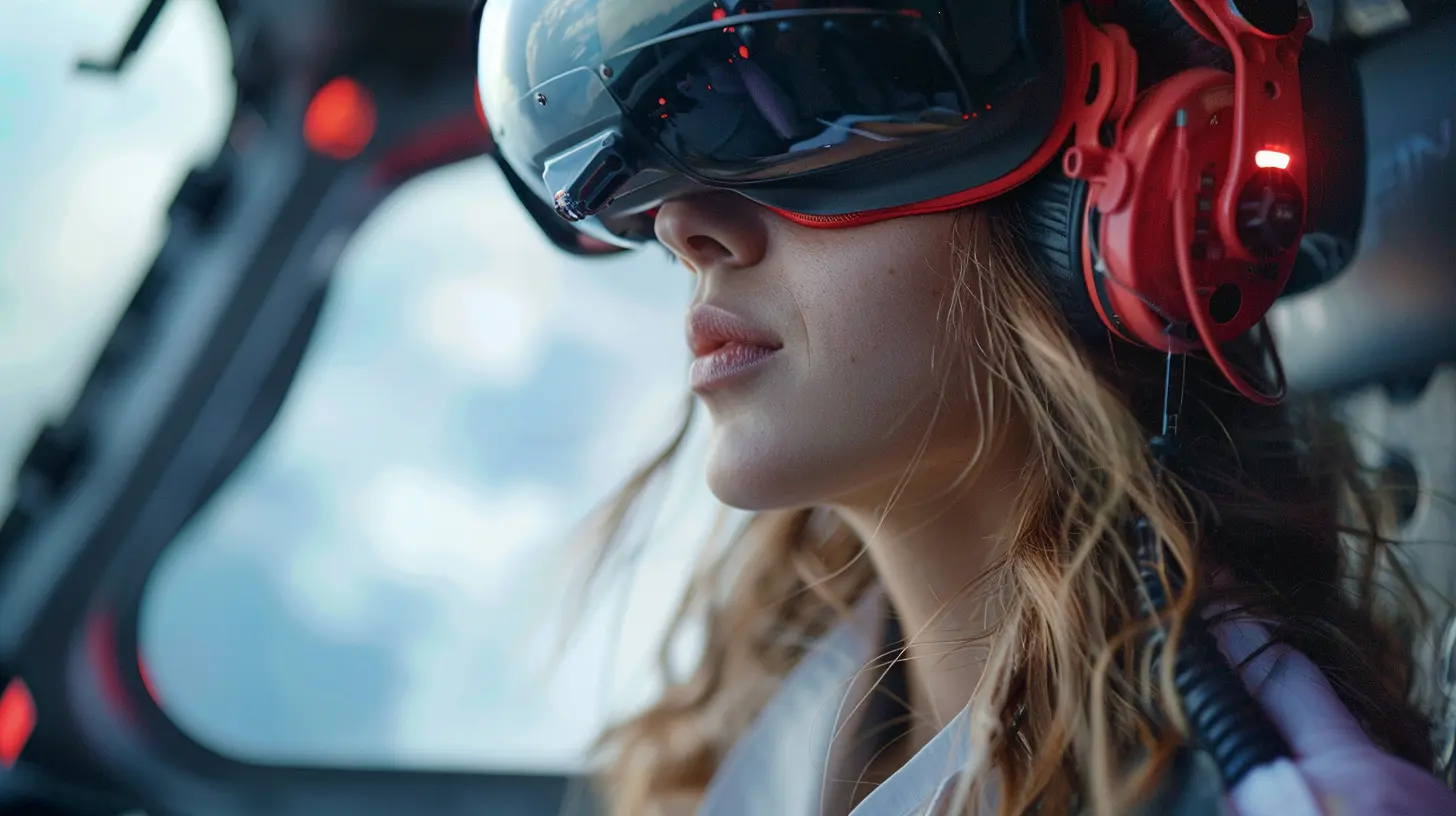
What to Look for in a VR Headset for Flight Simulators
Before we dive into the headsets, let’s talk about what really matters when choosing one for flight sims:1. Resolution: Clarity Is King
Flight sims are packed with details—cockpit instruments, distant airports, terrain, weather effects. A low-resolution headset can make everything look blurry and unreadable. Look for at least 2K per eye or higher.2. Field of View (FOV)
A wider FOV lets you see more of your cockpit and surroundings. That means better situational awareness and fewer blind spots when scanning the skies.3. Refresh Rate & Latency
You don’t want lag while lining up a landing. Higher refresh rates (90Hz+) and low latency ensure smoother, more responsive visuals. That’s especially key in fast-paced sims like DCS World.4. Comfort and Fit
Let’s face it: flight sim sessions can last hours. Your headset better be comfy, well-balanced, and breathable.5. Tracking and Controllers
Even though you might use a HOTAS setup, you’ll still need decent motion tracking. Good inside-out or external tracking ensures that your head movements are accurate and natural.6. Compatibility
Make sure the headset is compatible with your sim of choice. Microsoft Flight Simulator, X-Plane, and DCS all have different hardware needs and software integrations.
The Best VR Headsets for Flight Simulators in 2024
Here are the top contenders that consistently deliver an awesome virtual cockpit experience.? 1. HP Reverb G2 (V2) – Best Overall for Flight Sim Enthusiasts
Resolution: 2160 x 2160 per eyeFOV: ~114°
Refresh Rate: 90Hz
Price Range: Mid-range
If you're after crystal-clear visuals, the HP Reverb G2 is a no-brainer. The high resolution makes cockpit text super readable, which is a game-changer when you need to glance at your altimeter or nav instruments.
Comfort-wise, it’s pretty decent. It’s lightweight, and the adjustable head strap makes long-haul virtual flights way more enjoyable. Setup is fairly straightforward since it uses inside-out tracking (no external sensors needed).
The G2 is particularly loved by Microsoft Flight Simulator pilots, thanks to its excellent image clarity and plug-and-play Windows compatibility.
Pros:
✔ Excellent visual clarity
✔ Great value for money
✔ Inside-out tracking = easy setup
Cons:
✖ Controllers aren't the best (but you won’t use them much in a flight sim)
✖ Smaller sweet spot compared to some headsets
✈️ 2. Pimax Crystal – Best for Ultra-Wide FOV and Visual Fidelity
Resolution: 2880 x 2880 per eyeFOV: Up to 140°
Refresh Rate: 90Hz
Price Range: Premium
Say hello to the king of wide field-of-view. The Pimax Crystal offers one of the sharpest, most immersive experiences out there. It's kind of like wearing a pilot’s helmet with a panoramic view of the sky.
Its QLED + Mini LED displays are jaw-droppingly good. You can spot terrain details from miles away, track aircraft in your periphery, and feel really in the sky.
It’s definitely on the pricey side, and setup can be a bit intense, but for hardcore simmers, it’s absolutely worth it.
Pros:
✔ Top-tier visuals
✔ Massive field-of-view
✔ Great build quality
Cons:
✖ Expensive
✖ Requires a beefy PC setup
✖ Slightly complex setup process
?️ 3. Meta Quest 3 – Best Wireless Option for Casual Flyers
Resolution: 2064 x 2208 per eyeFOV: ~110°
Refresh Rate: 120Hz
Price Range: Affordable to mid-range
If you're just dipping your toes into flight sim VR or want something more flexible, the Meta Quest 3 is your ticket.
Unlike most tethered VR headsets, the Quest 3 can run wirelessly using Air Link or Virtual Desktop. That means no cables, fewer hassles, and more freedom. It’s super user-friendly and works surprisingly well with Microsoft Flight Simulator when connected to a PC.
Of course, you’ll need a strong Wi-Fi connection and a decent GPU to get the best experience. Still, for casual flyers or those curious about VR, this is a solid pick.
Pros:
✔ Wireless gameplay
✔ Affordable entry point
✔ Easy to set up and use
Cons:
✖ Slightly lower clarity than G2 or Crystal
✖ Needs great Wi-Fi for optimal performance
?️ 4. Varjo Aero – Best for Hardcore Flight Sim Fans
Resolution: 2880 x 2720 per eyeFOV: ~115°
Refresh Rate: 90Hz
Price Range: Ultra-premium
If you're the kind of person who builds a full home cockpit and logs virtual flight hours like a real pilot, welcome to the big leagues.
The Varjo Aero is a professional-grade headset that offers insanely sharp visuals, mind-blowing edge-to-edge clarity, and an almost distortion-free image. Reading gauges? Piece of cake. Spotting landmarks at distance? No problem.
It's expensive, yes—but for those who take their simming very seriously, it might be the holy grail.
Pros:
✔ Elite image quality
✔ Pro-level optics and comfort
✔ Designed for sim professionals
Cons:
✖ Very expensive
✖ Limited compatibility outside of PCVR
⚙️ 5. Valve Index – Best for Balanced Performance and Build Quality
Resolution: 1440 x 1600 per eyeFOV: ~130°
Refresh Rate: 120Hz (up to 144Hz)
Price Range: Mid to high
The Valve Index may be a few years old, but it’s aging like fine wine. Its super-smooth refresh rate and wide field-of-view make it a delight for DCS World players who like high-intensity dogfighting and fast response times.
The build quality is second to none. It’s comfy for long sessions and has excellent tracking accuracy thanks to external base stations.
If you enjoy flying and dabble in VR games beyond flight sims, the Index strikes a sweet balance.
Pros:
✔ Excellent FOV and refresh rate
✔ High build quality and comfort
✔ Strong performance across various VR titles
Cons:
✖ Requires external sensors
✖ Lower resolution than newer models 
Bonus: Tips to Enhance Your Flight Sim VR Setup
Want to squeeze every drop of realism out of your setup? Try these:- Use a HOTAS setup (Hands-On Throttle-And-Stick): Way better than using controllers.
- Invest in rudder pedals: Especially useful for landing and taxiing.
- Get a powerful GPU: VR is demanding. An RTX 3080 or better is recommended.
- Optimize your settings: Tweak VR graphics settings for a balance between visuals and performance.
- Add motion platforms (if budget allows): For next-level immersion, look into sim chair platforms.
So, Which Headset Should You Choose?
That depends on your budget, goals, and how hardcore you want to get.- Want top visuals without breaking the bank? Grab the HP Reverb G2.
- Want a super-wide view with stunning clarity? Go big with the Pimax Crystal.
- Casual flyer on a budget? The Meta Quest 3 is a fantastic choice.
- Serious sim pilot with cash to burn? The Varjo Aero will blow your mind.
- Want the best all-rounder with premium build? Valve Index will serve you well.
No matter which one you choose, the upgrade to VR will completely transform your flight experience. You’ll never want to go back to a flat screen again.
Ready to take off? Strap in, start your engines, and take to the skies!
all images in this post were generated using AI tools
Category:
Vr HeadsetsAuthor:

Jerry Graham
Discussion
rate this article
1 comments
Camille Long
Great article! The world of VR and flight simulation is truly exciting. It's amazing how these headsets can elevate the flying experience, making it feel so real. Looking forward to trying out some of these recommendations. Happy flying!
July 17, 2026 at 4:28 AM
Jerry Graham
Thanks for reading! I'm glad you found the article exciting. Enjoy your VR flying experience!