How Edge Computing Will Power the Next E-Commerce Wave
18 August 2026
E-commerce has always been a game of speed. Faster page loads, quicker checkouts, and shorter delivery times have decided winners and losers for two decades. But we have hit a wall. The cloud, for all its wonders, is too far away from the user. Every millisecond of latency feels like an eternity when a shopper is one click away from abandoning their cart. Enter edge computing. Not as a buzzword, but as the structural fix that will carry online retail through the next decade.
Think of edge computing as moving the brain closer to the senses. Instead of sending every request to a central data center in Virginia or Frankfurt, you process data at the network's rim - in local servers, in cell towers, or even inside the store itself. For e-commerce, this is not just a technical upgrade. It is a fundamental shift in how you design, deploy, and monetize your digital storefront.
The Latency Problem Nobody Solved
We have all seen the stats. A one-second delay in page load can cut conversions by a significant margin. But we have also grown numb to those numbers. The real issue is not speed in the abstract. It is the unpredictability of speed. A shopper on a 5G connection in Seoul might get a 40-millisecond response from a cloud server in Tokyo. But the same shopper during peak hours might see 300 milliseconds. That variance kills trust.You cannot fix variance with a faster central server. You can only fix it by moving the computation closer to the user. Edge computing does exactly that. It places micro-data centers in the cities where your customers actually live. The result is not just lower latency. It is consistent latency. The user experience becomes predictable, and predictable is what converts.
Consider a flash sale. Ten thousand people hit your site at the same second. A central cloud will throttle or queue requests. The edge, however, can handle local bursts because each edge node only sees the traffic from its own region. That is the difference between a smooth sale and a total meltdown.

Personalized Shopping Without the Creepy Feeling
Personalization has a bad reputation. Everyone wants a tailored experience, but nobody wants to feel watched. Edge computing offers a middle path. Because the edge node is closer to you, it can process your browsing behavior locally without sending every click back to a central server. That means personalization can happen in real time, but with far less data leaving your device.Here is how it works in practice. You are looking at running shoes. Your local edge node tracks that you have lingered on a specific model for thirty seconds. It knows your rough location and the weather outside. It can instantly adjust the page to show waterproof options if it is raining. That is not a creepy algorithm reading your mind. It is a local, context-aware system responding to immediate signals.
The trade-off is that edge personalization is less deep than cloud-based machine learning. The edge node does not know your purchase history from five years ago. So you have to design a hybrid system. Use the edge for instant, context-driven tweaks. Use the cloud for long-term user profiles and recommendations. The mistake most companies make is trying to do everything on the edge or everything in the cloud. The winners will split the difference.
The Real Cost of Cloud-Only Architecture
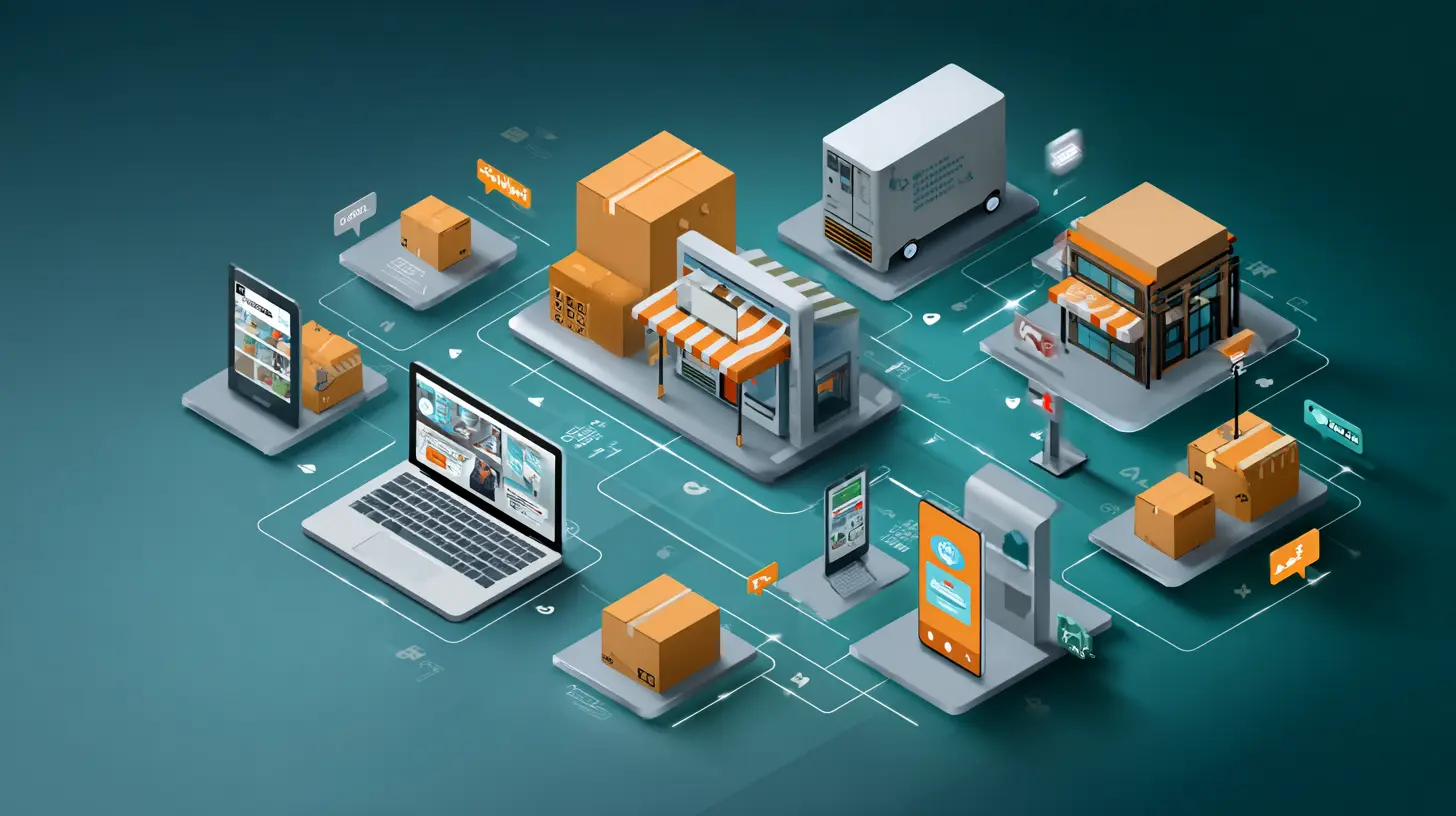
Cloud computing is not cheap. The data transfer fees alone can eat a startup's entire runway. Every image, every product video, every API call costs money. And the cost scales linearly with success. More users mean more bandwidth, which means a bigger bill. Edge computing flips that equation.When you process content at the edge, you reduce the amount of data that travels over expensive long-haul networks. Instead of sending a full product page from a central server, you send a lightweight template to the edge node. The edge node fills in the dynamic parts - inventory, price, local promotions - and serves the page from its local cache. This cuts bandwidth costs dramatically.
But do not assume edge is always cheaper. You have to pay for the edge infrastructure itself, whether that is renting space in local data centers or managing your own nodes. For a small business with a few thousand monthly visitors, the cloud is still the better deal. For a mid-sized or large operation with global reach, edge computing saves money on bandwidth and reduces cloud egress fees. The break-even point depends on your traffic volume and geographic spread.
Handling the Inventory Nightmare in Real Time
Inventory management is the silent killer of e-commerce profits. You show an item as in stock, but it is actually sitting in a warehouse on the other side of the country. The customer orders it, waits five days, then gets a cancellation email. Nobody wins. Edge computing changes that by enabling localized inventory tracking.Imagine a network of edge nodes, each one connected to the warehouses and fulfillment centers in its region. When a shopper in Chicago looks at a product, the local edge node knows exactly what is available in the Illinois and Indiana warehouses. It can show accurate stock levels and realistic delivery dates. It can even adjust the recommended shipping method based on real-time logistics data.
The beauty is that this happens without a round trip to a central database. The edge node syncs with the cloud periodically, but between syncs, it operates on local data. This means your inventory display is always accurate enough for the customer, even if it is not perfectly synchronized with the central system. The practical advice here is to set up edge nodes near your major fulfillment centers, not just near your customers. That way, the data path between the node and the warehouse is short.
The Checkout Flow That Does Not Make People Cry
Checkout is where e-commerce dreams die. Every extra field, every slow API call, every payment gateway timeout is a lost sale. Edge computing can streamline checkout in two major ways.First, it can host the entire checkout logic locally. The payment tokenization, the shipping calculation, and the order validation all happen at the edge. This removes the need for multiple round trips to a central server. The customer clicks "Buy Now" and the edge node processes the transaction in a single, fast sequence.
Second, edge nodes can handle payment failures gracefully. If the payment gateway is slow, the edge node can retry the transaction locally without refreshing the page. It can also offer alternative payment methods based on regional preferences, which it knows because it lives in that region. For example, an edge node in the Netherlands knows that iDEAL is the dominant payment method. A cloud server in the US might not have that local knowledge.
The downside is that payment security is critical. You cannot just throw a payment form on an edge node and hope for the best. You need proper encryption, tokenization, and compliance with PCI-DSS standards. The edge node is not a substitute for a secure payment gateway. It is a fast proxy that communicates with the gateway. Get that architecture right, and you will see a measurable increase in checkout completion rates.
Augmented Reality and the Edge Connection
Augmented reality is the next big thing in e-commerce, especially for furniture, cosmetics, and fashion. But AR is computationally heavy. Running a 3D model of a sofa in your living room requires serious processing power. Doing that on a phone is possible, but it drains battery and heats up the device. Doing it on a central cloud introduces too much latency.Edge computing is the sweet spot. The AR rendering happens on a nearby edge server, which streams the result to your phone. The phone only handles the final display, not the heavy lifting. This is how you get smooth, realistic AR experiences without requiring users to own flagship phones.
The catch is that AR at the edge requires a robust network connection. If you are in a rural area with poor coverage, the edge node might be too far away or overloaded. So the practical approach is to offer AR as a progressive enhancement. Users with strong connections get the full experience. Users with weak connections get a static image or a simple 3D rotation. Do not force AR on everyone, or you will alienate a chunk of your audience.
The 5G Partnership That Actually Matters
Everyone talks about 5G and edge computing as if they are the same thing. They are not. 5G is the pipe. Edge computing is the brain at the end of the pipe. You can have 5G without edge, and you can have edge without 5G. But together, they are transformative.5G offers lower latency and higher bandwidth than 4G. But low latency to what? If the server is a thousand miles away, 5G does not help much. The network gets your request to the core quickly, but then it has to travel over the long-haul fiber. Edge computing shortens that travel time. The two technologies multiply each other's benefits.
For e-commerce, this means mobile shopping will feel native, not like a scaled-down website. Product images will load instantly. Videos will play without buffering. Voice search will work reliably because the speech recognition happens at the edge. The mobile web will finally compete with native apps in terms of responsiveness.
The Edge and the Internet of Things in Retail
Physical stores are not dead. They are becoming showrooms, pickup points, and experience centers. Edge computing ties the physical and digital worlds together. Consider a smart shelf in a store. It has sensors that track when items are removed. The edge node in the store processes that data and updates the online inventory in real time. If someone buys the last pair of sneakers in the store, the website immediately shows them as out of stock.This is not just convenience. It is a way to avoid over-selling and disappointing customers. The edge node can also trigger automatic restocking orders when inventory drops below a threshold. It can adjust prices on digital signage based on foot traffic and time of day. The store becomes a living data center.
The challenge is integration. Most retailers have legacy POS systems and old inventory databases. You cannot just slap an edge node on top of that mess. You need a clean API layer that connects the edge to your central systems. Start with a pilot in one store, measure the results, and then scale. Do not try to change everything at once.
Common Mistakes and How to Avoid Them
The biggest mistake is thinking edge computing is a single product you can buy. It is an architecture pattern. You have to design your system with edge in mind from the start. That means deciding which components live at the edge, which stay in the cloud, and how they communicate.Another mistake is ignoring the consistency problem. Edge nodes are eventually consistent, not immediately consistent. If a user updates their profile, that change might not reach every edge node instantly. For most e-commerce applications, that is fine. But for things like gift card balances or loyalty points, you need strong consistency. Do not put those on the edge. Keep them in the cloud and access them via a fast API.
A third mistake is over-engineering. Not every feature needs edge computing. If your users are all in one city and your cloud server is in that same city, edge is pointless. Start by measuring your actual latency and identifying the slowest parts of your user journey. Fix those first.
How to Start Your Edge Journey Today
You do not need to build your own edge network. There are plenty of commercial providers that offer edge computing as a service. Look for providers with points of presence in the regions where your customers are. Test their performance with a simple static page first. Then move on to dynamic content.The practical first step is to move your static assets to a CDN. Most people already do this with images and CSS. The next step is to use a CDN that supports edge functions. These are small pieces of JavaScript that run at the edge and can personalize content, handle A/B testing, or enforce security rules. This is a low-risk way to get your toes wet.
After that, consider moving your product catalog to an edge database. This is a read-heavy workload that benefits greatly from local caching. The write operations, like order creation, can stay in the cloud. This hybrid approach gives you the speed of edge without the complexity of distributed transactions.
The Future Is Distributed
The next wave of e-commerce will not be won by the biggest cloud bill. It will be won by companies that understand where to put their intelligence. Edge computing is not about abandoning the cloud. It is about extending it. The cloud handles the heavy, centralized tasks like machine learning training and global analytics. The edge handles the real-time, localized tasks that make shopping feel instant.The transition will not be smooth. There will be growing pains, new security challenges, and a learning curve for developers. But the companies that start now will have a massive advantage in three to five years. The ones that wait will be stuck explaining why their checkout takes three seconds while their competitors take three hundred milliseconds.
The question is not whether edge computing will power the next e-commerce wave. The question is whether you will be riding that wave or watching it from the shore.
all images in this post were generated using AI tools
Category:
E Commerce TechnologyAuthor:

Jerry Graham
Discussion
rate this article
1 comments
Clara Huffman
Exciting insights on edge computing's impact on e-commerce!
August 26, 2026 at 12:43 PM