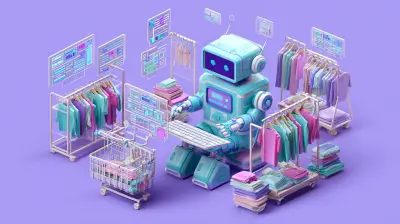
How AI is Changing the Landscape of E-Commerce
26 July 2026
Artificial Intelligence (AI) is no longer just a buzzword; it's transforming industries, and e-commerce is no exception. From personalized shopping experiences to optimizing supply chains, AI is reshaping how businesses operate and how consumers shop online. But what exactly does that mean for the average shopper? And how is AI making waves in an industry that’s already heavily reliant on innovation?
In this article, we’ll dive deep into how AI is changing the landscape of e-commerce, why it’s crucial, and what the future might hold. So, if you're curious about how robots and algorithms are influencing your online shopping experience, buckle up because we’re about to explore this fascinating topic.

The Power of Personalization
One of the most significant ways AI is transforming e-commerce is through personalization. Think about how many times you've shopped online and received recommendations for products that seem eerily accurate. That’s not magic; that’s AI at work.Tailor-Made Shopping Experiences
AI algorithms analyze your browsing history, past purchases, and even how long you linger on specific items. This data is then used to predict what you’re most likely to buy. Ever noticed how after you purchase a pair of sneakers, your feed is suddenly filled with suggestions for socks, athletic wear, or even water bottles? That’s AI creating a personalized shopping journey tailored just for you.Retailers like Amazon, Netflix, and Spotify are masters of this. They use AI to recommend products or content based on your behavioral patterns. And it works. Studies show that personalized shopping experiences can increase conversion rates by up to 10%.
Dynamic Pricing: The Game Changer
Another AI-driven feature that’s shaking up the e-commerce world is dynamic pricing. AI algorithms can adjust prices in real-time based on factors like demand, competitor pricing, and even your shopping habits. Ever noticed how flight prices seem to fluctuate wildly? That’s dynamic pricing in action.For e-commerce, this means a more competitive marketplace. Retailers can optimize their pricing strategies to stay ahead of the competition, and consumers can benefit from potentially lower prices or special offers tailored to them.

AI Chatbots: The New Customer Service Reps
We’ve all had less-than-stellar experiences with customer service. Long wait times, unhelpful reps, and frustrating processes. Enter AI chatbots, the 24/7 customer service agents that never get tired, always respond instantly, and can handle multiple queries at once.Always There, Always Helpful
AI chatbots are capable of answering common customer questions, guiding users through the shopping process, and even helping with complaints or returns. The best part? They’re always available. Whether it’s 2 PM or 2 AM, you can get quick answers without waiting in a queue.Chatbots are becoming increasingly sophisticated thanks to Natural Language Processing (NLP). They can now understand and simulate human conversation better than ever before. While early chatbots were often frustratingly limited, today's versions are much more intuitive and helpful, sometimes even indistinguishable from human agents.
Reducing Operational Costs
For businesses, AI chatbots are a cost-effective solution. Instead of employing a massive customer service team, companies can deploy chatbots to handle routine inquiries. This reduces operational costs and allows human agents to focus on more complex issues. It's a win-win for both businesses and consumers.
Visual Search: Shopping with Your Eyes
Visual search is another exciting advancement in AI that's changing how we shop. Rather than typing in keywords, you can now search for products using images. Let’s say you see a pair of shoes on Instagram that you absolutely love. Instead of trying to describe them in words, you can upload the image to a visual search engine, and voilà, similar products appear right before your eyes.Bridging the Gap Between Offline and Online Shopping
This feature is especially useful for fashion and home decor shoppers. Visual search bridges the gap between offline and online shopping by allowing users to find similar items to those they’ve seen in real life. It’s not just about convenience; it’s about making the shopping experience more intuitive and user-friendly.Retailers like Pinterest and ASOS have already adopted visual search, and it’s only a matter of time before this feature becomes standard across most e-commerce platforms.

AI in Supply Chain and Inventory Management
Behind every seamless online shopping experience is a complex supply chain working tirelessly to ensure that products are available and delivered on time. AI is playing a significant role in optimizing these back-end processes.Predictive Analytics for Stock Management
One of the biggest challenges for e-commerce businesses is managing their inventory. Too little stock, and you risk running out of popular items. Too much stock, and you’re stuck with excess inventory that may not sell. AI helps solve this problem through predictive analytics.By analyzing historical sales data, current trends, and even external factors like weather or economic conditions, AI can predict which products are likely to sell and in what quantities. This allows businesses to manage their stock levels more effectively, reducing waste and maximizing profits.
Enhancing Delivery Efficiency
AI is also making deliveries faster and more efficient. Algorithms can optimize delivery routes, ensuring that drivers take the quickest path possible. This not only speeds up delivery times but also reduces fuel consumption, making the entire process more eco-friendly.Moreover, AI can predict potential delays, whether due to traffic, weather, or other factors, and adjust routes or delivery schedules accordingly. This kind of foresight helps e-commerce companies maintain their reputation for fast, reliable shipping—a critical factor in customer satisfaction.
Fraud Detection and Secure Payments
Security is a major concern in e-commerce, especially with the rise of online transactions and the increasing sophistication of cyber-attacks. AI is stepping in to enhance fraud detection and secure payment methods.Real-Time Fraud Detection
AI-powered systems can detect fraudulent activities in real-time. These systems analyze patterns in transaction data, flagging anything that seems out of the ordinary. For instance, if someone tries to use your credit card from a location you’ve never been to, AI can immediately block the transaction and alert you.This kind of real-time monitoring is crucial for both businesses and consumers. It prevents financial losses and builds trust, which is essential for the success of any e-commerce platform.
Enhanced Payment Security
AI is also being used to enhance payment security. Biometric verification methods, such as facial recognition or fingerprint scans, are becoming more common in e-commerce. These AI-driven technologies add an extra layer of security, making it harder for fraudsters to gain access to your personal information.Blockchain technology, often paired with AI, is also being explored as a way to secure transactions further. While still in its early stages, the combination of AI and blockchain could revolutionize how we think about secure payments in the future.
AI and the Future of E-Commerce
So, where is all this headed? The role of AI in e-commerce is only going to expand as technology becomes more advanced. Here are a few exciting possibilities:Voice Commerce
As voice assistants like Amazon’s Alexa and Google Home become more popular, voice commerce is expected to take off. Imagine being able to order groceries or a new pair of shoes simply by talking to your smart speaker. AI will be the backbone of this new shopping method, making it seamless and convenient.Augmented Reality (AR) Shopping
Another area where AI is making strides is augmented reality (AR). In the future, you might be able to “try on” clothes or “place” furniture in your living room before making a purchase, all from the comfort of your home. AI will power these experiences, making online shopping feel more like an in-store experience than ever before.Hyper-Personalization
We’ve already talked about personalization, but it’s about to get even more specific. AI will continue to refine its algorithms, offering hyper-personalized experiences based on even more detailed data points. Your shopping experience might become so personalized that every single recommendation feels like it was handpicked just for you.Conclusion
AI is undeniably changing the landscape of e-commerce in ways that benefit both businesses and consumers. From personalized shopping experiences and dynamic pricing to chatbots, visual search, and enhanced security, AI is making online shopping faster, smarter, and more efficient.But this is just the beginning. As AI continues to evolve, we can expect even more groundbreaking changes in the world of e-commerce, from voice commerce to AR shopping and beyond. So, the next time you shop online, remember: it’s not just you and your screen. There’s a whole world of AI working behind the scenes, shaping your experience in ways you never thought possible.
all images in this post were generated using AI tools
Category:
Artificial IntelligenceAuthor:

Jerry Graham
Discussion
rate this article
1 comments
Adam Vasquez
Great insights on AI's impact! Excited to see how this evolves.
July 28, 2026 at 3:40 AM
Jerry Graham
Thanks for your support! It's an exciting time for e-commerce and AI. Looking forward to what comes next!