Best Practices for Smartphone Charging You Might Be Doing Wrong
18 October 2026
Most people charge a phone the same way they have for years. Plug it in at night, unplug it in the morning, and repeat. It feels harmless because nothing dramatic happens. But lithium-ion batteries, which power virtually every smartphone on the market, degrade quietly. Every full charge, every hot afternoon spent plugged into a car dash, every cheap cable pushes the chemistry a little further from its original capacity.
The frustrating part is that the advice most people follow is either outdated, oversimplified, or flat-out wrong. "Never let it drop below 20 percent." "Always charge to 100." "Don't leave it plugged in overnight." Some of these contain a kernel of truth. Others are myths that refuse to die. This article breaks down what actually matters, why it matters at the electrochemical level, and how to adjust your habits without turning charging into a chore.
Understanding What Actually Ages a Battery
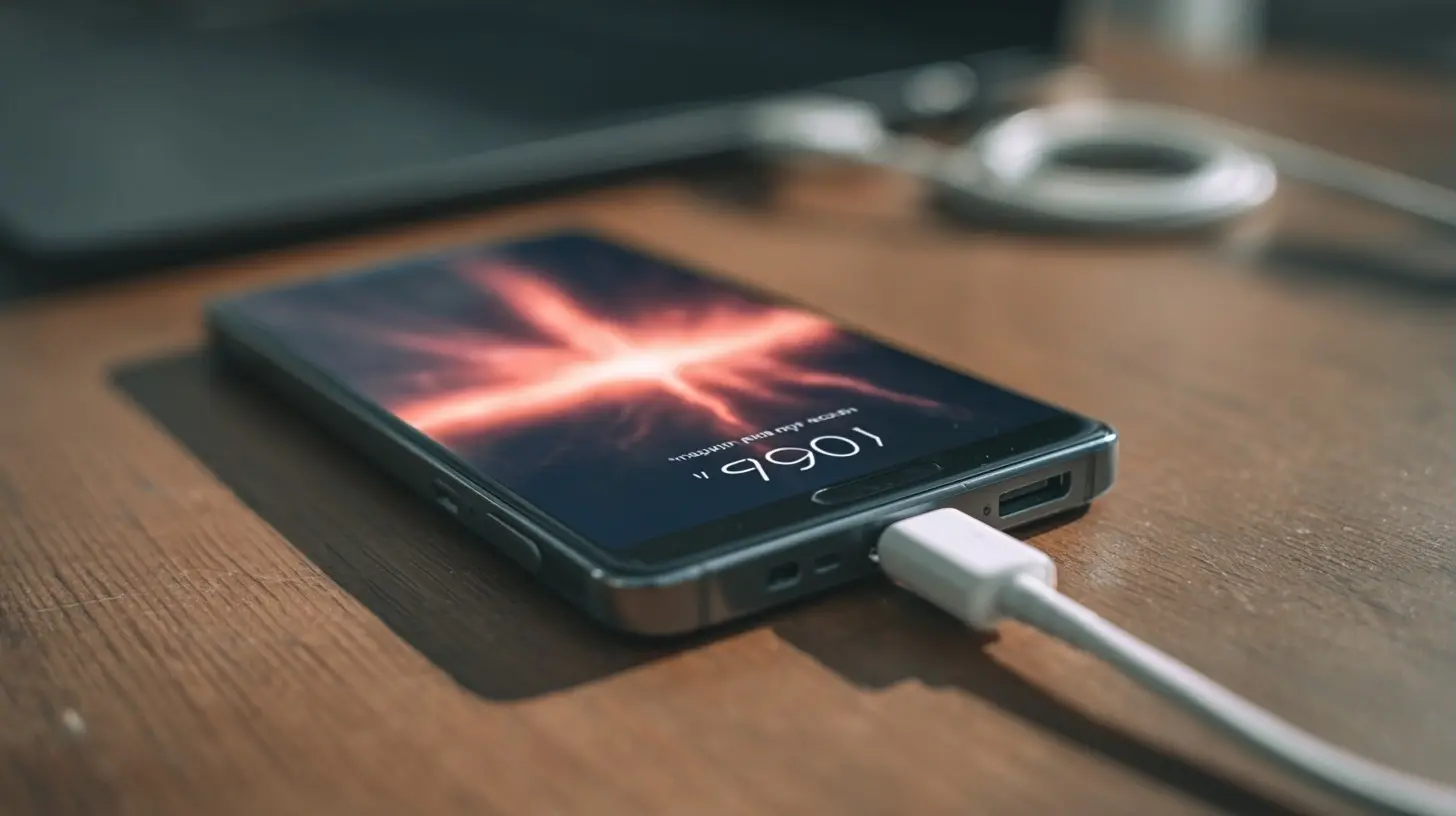
Before diving into practices, you need a working mental model of battery degradation. Without it, every tip feels arbitrary.A lithium-ion battery stores energy by shuttling lithium ions between two electrodes: a graphite anode and a metal-oxide cathode. When you charge, ions move from cathode to anode. When you discharge, they move back. This shuttling is not perfectly reversible. Over hundreds of cycles, three things happen:
Calendar aging. The battery loses capacity simply by existing, even if unused. This happens faster at high states of charge and high temperatures. A battery sitting at 100 percent in a warm room ages noticeably faster than one sitting at 50 percent in the same room.
Cycle aging. Each full charge-discharge cycle consumes a small amount of usable capacity. Partial cycles count fractionally, which is why shallow charging is gentler than deep cycling.
Thermal stress. Heat accelerates both of the above. Charging generates heat. Fast charging generates more. Gaming while charging generates the most. Every degree above roughly 30 degrees Celsius compounds the damage.
The key insight: battery wear is not linear and not binary. It is a function of voltage stress, temperature, and time. Your charging habits influence all three. That is why the advice below matters, and why blanket rules like "always charge to 100" miss the point entirely.
The 100 Percent Question
Many people believe a full charge is ideal because that is what the battery gauge says. In reality, a lithium-ion cell at 100 percent sits at its maximum voltage, typically around 4.2 volts per cell, sometimes higher in modern fast-charge designs. At that voltage, the electrolyte degrades faster and the cathode becomes more reactive. Keeping a battery pinned at full charge is one of the most reliable ways to shorten its life.This is not speculation. Battery researchers have known for years that storing lithium-ion cells at lower states of charge extends their calendar life. Laptop manufacturers, who face the same chemistry, have shipped features that cap charging at 60 to 80 percent for users who keep devices plugged in. Phone makers have followed with optimized charging modes that delay the final push to 100 percent until just before you wake up.
So should you never charge to 100? Not quite. The trade-off is range. Capping at 80 percent gives you roughly 80 percent of the runtime, and on a phone with mediocre battery life, that might mean charging twice a day, which introduces more cycles. The pragmatic approach depends on your situation:
- If you have easy access to a charger during the day, cap your charge at 80 to 85 percent. Many phones offer this as a setting.
- If you are often away from power for long stretches, charge fully. The convenience outweighs the marginal wear.
- Avoid leaving the phone at 100 percent for hours on end, especially in warm environments. That is the worst combination.
The nuance matters. A phone that spends eight hours a night at 100 percent on a nightstand in a warm bedroom is aging faster than one that reaches 100 percent right before you unplug it. Optimized charging features exist precisely to address this.
Overnight Charging: Not the Villain You Think
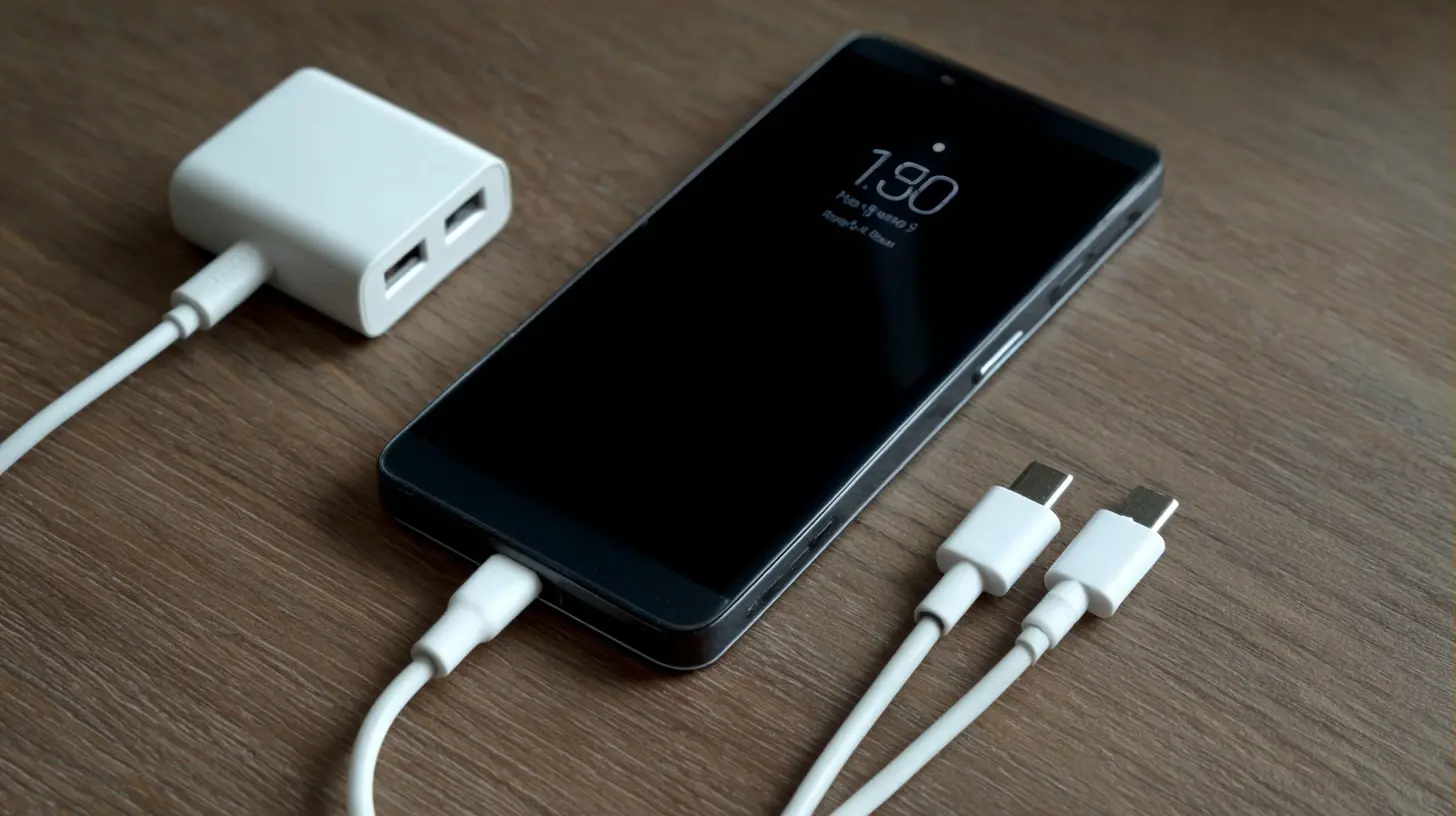
Overnight charging gets a bad reputation, largely because of the old nickel-cadmium memory effect that has not applied to phones in over a decade. Modern lithium-ion batteries do not suffer from memory. Leaving a phone plugged in overnight will not "overcharge" it because the charging circuit stops current flow once the cell reaches its target voltage.That said, overnight charging is not free of consequences. The real issue is the combination of time at high voltage and heat. If your phone charges to 100 percent at 11 p.m. and sits there until 7 a.m., it spends eight hours at maximum voltage. If it is under a pillow or in a warm room, the damage compounds.
The practical fixes are straightforward:
1. Enable optimized or adaptive charging if your phone has it. This learns your schedule and holds the battery around 80 percent until closer to your wake time.
2. Charge on a hard surface, not under bedding or on a soft cushion that traps heat.
3. Remove thick cases during charging if you notice the phone getting warm.
4. If you do not need a full battery in the morning, use a smart plug or a charger with a timer to stop the flow partway through the night.
None of this means overnight charging is dangerous. It means it is a habit worth optimizing rather than fearing.
Fast Charging: Convenience With a Cost
Fast charging has become a headline feature. Companies advertise wattage numbers the way they once advertised megapixels. The technology is genuinely useful, and modern implementations are far gentler than early versions. But it is not free.Higher charging power means more current or higher voltage, both of which generate heat. Battery management systems mitigate this by tapering the charge rate as the battery fills. Most fast charging happens in the 0 to 50 percent range, then slows dramatically. That taper is why a phone that charges to 50 percent in 20 minutes might take another 40 minutes to reach 100.
The trade-off is real but manageable:
- Use fast charging when you need it, such as before leaving the house or during a short layover.
- Use slower charging overnight or when you have time. A 5W or 10W charger produces less heat and is gentler on the cell.
- Avoid fast charging in hot environments, such as a car in direct sunlight. Heat plus high current is the worst combination for longevity.
- Do not fast charge while gaming or running heavy tasks. The phone is already generating heat from the processor.
There is also a misconception worth addressing: fast charging does not "fry" your battery in normal use. The charging circuitry negotiates voltage and current with the charger, and reputable devices will not accept more than they can safely handle. The damage comes from cumulative thermal stress, not from a single fast charge.
Heat Is the Real Enemy
If you take one thing from this article, make it this: heat damages batteries more than almost any other factor. A battery charged at 25 degrees Celsius will outlast an identical battery charged at 40 degrees Celsius by a wide margin. This is why electric vehicle manufacturers spend significant engineering effort on thermal management, and why phone makers throttle charging when the device gets warm.Common heat sources people overlook:
- Charging on a bed, couch, or pillow, which insulates the phone.
- Leaving the phone on a car dashboard or in a hot car.
- Using a thick, poorly ventilated case during fast charging.
- Charging while navigating with the screen at full brightness in sunlight.
- Wireless charging pads that generate more heat than wired connections.
Wireless charging deserves its own note. It is convenient, but it is inherently less efficient than wired charging because energy is lost in the transfer. That lost energy becomes heat. If you use wireless charging, choose a pad with active cooling or good ventilation, and avoid stacking a thick case on top. For overnight charging, a low-power wired connection is often the cooler, gentler choice.
The 20 to 80 Percent Rule: Useful, Not Sacred
You have probably heard that you should keep your battery between 20 and 80 percent. This advice has real grounding. Lithium-ion cells experience the least stress in the middle of their voltage range. Deep discharges below roughly 20 percent put extra strain on the anode, and full charges push the cathode to its upper limit. Staying in the middle reduces both.But the rule is often presented as an absolute, and that is where it becomes impractical. If you follow it rigidly, you are using only 60 percent of your battery's capacity, which means more charge cycles per day. More cycles can offset the benefit of shallower charging. The net effect depends on your usage pattern.
A more useful framing: avoid the extremes when convenient, but do not obsess. Charging from 40 to 70 percent repeatedly is gentler than going from 5 to 100 percent every day. But if you need a full battery for a long day, charge fully. The occasional deep cycle is not catastrophic. It is the daily habit of running to zero and back to 100 that adds up.
Cable and Charger Quality: The Underrated Factor
People spend hundreds on a phone and then use a gas-station cable. This is a false economy. Poor-quality chargers and cables can cause several problems:- Voltage instability. Cheap chargers may not regulate voltage well, which forces the phone's charging circuit to work harder and generate more heat.
- Inconsistent negotiation. USB Power Delivery and other fast-charge protocols rely on communication between charger and device. Faulty cables can cause the phone to fall back to slow charging or, worse, behave unpredictably.
- Safety risk. Low-quality components can overheat or fail. This is rare but not unheard of.
You do not need to buy the most expensive charger on the market. You do need one from a reputable brand that supports the charging protocol your phone uses. Look for certified cables and chargers, and replace any cable with frayed insulation or a loose connector. A damaged cable is a fire risk, not just a performance issue.
Charging Cycles and How to Count Them
A charge cycle is not a single plug-in event. It is the equivalent of using 100 percent of the battery's capacity, however that happens. Charging from 50 to 100 percent twice counts as one cycle. Charging from 0 to 100 once also counts as one cycle. This is why partial charging is not wasteful in the way some people assume.Manufacturers typically rate phone batteries for several hundred to around a thousand full cycles before capacity drops to roughly 80 percent of original. The exact number varies by chemistry, cell design, and how the battery is treated. A battery that lives in a hot environment and spends most of its time at 100 percent might reach that threshold much sooner than one that is kept cool and partially charged.
The practical takeaway: do not fear plugging in for short top-ups. A 10-minute charge here and there is not harmful. What matters is the cumulative stress, not the number of times you connect the cable.
Common Myths That Need to Die
Several pieces of charging advice circulate widely and are either wrong or outdated.Myth: You must fully discharge a new phone before first use. This was true for nickel-cadmium batteries decades ago. Modern lithium-ion batteries have no memory effect. Calibrating the battery gauge occasionally can help the software report accurately, but draining to zero is not required and is actually stressful for the cell.
Myth: Leaving a phone plugged in after 100 percent ruins the battery. The charging circuit stops current flow at full charge. The real concern is time spent at high voltage and heat, not the act of being plugged in. Optimized charging features address this directly.
Myth: Off-brand chargers always damage phones. Quality varies enormously. A well-made third-party charger from a reputable brand is fine. The risk comes from uncertified, ultra-cheap products with poor regulation.
Myth: Charging overnight is dangerous. Modern phones have multiple layers of protection against overcharging and overheating. The risk is degradation over time, not immediate danger, and even that is manageable with a few simple habits.
Myth: You should never use your phone while charging. Light use is fine. Heavy use, such as gaming or video calls, generates heat that compounds with charging heat. Moderation is the answer, not abstinence.
Practical Habits Worth Adopting
Here is a consolidated set of practices that balance battery longevity with real-world convenience.1. Enable optimized charging if your phone offers it. This is the single easiest change with meaningful benefit.
2. Keep the phone cool while charging. Remove thick cases, avoid soft surfaces, and never charge in direct sunlight or a hot car.
3. Use fast charging selectively. Save it for when you need a quick top-up. Use slower charging overnight.
4. Avoid routine deep discharges. Plug in before the battery hits zero when you can. Occasional full drains are fine.
5. Cap charge at 80 to 85 percent if your daily routine allows it and your phone supports a charge limit.
6. Use reputable chargers and cables. Certified, well-reviewed products reduce heat and risk.
7. Do not stress about perfection. Batteries degrade. That is normal. The goal is to slow the process, not to eliminate it.
When to Replace Instead of Optimize
At some point, no charging habit will rescue a worn battery. If your phone shuts down unexpectedly at 20 percent, drains unusually fast, or the battery health reading has dropped well below 80 percent, replacement is the practical answer. Many phones now support battery replacement at reasonable cost, and doing so can extend the device's usable life by years.This is also where the environmental argument comes in. Keeping a phone for four or five years instead of two, with a battery replacement in the middle, has a far larger impact than any charging micro-optimization. Charging habits are worth improving, but they are one part of a broader approach to device longevity.
Final Thoughts
Smartphone charging is one of those areas where small, consistent choices matter more than dramatic rules. The chemistry does not care about folklore. It responds to voltage, temperature, and time. Understand those three forces, and the right habits become obvious: keep the battery cool, avoid parking it at 100 percent for long stretches, use fast charging when it helps and slow charging when it does not, and do not treat every plug-in as a life-or-death decision.You will still replace a battery eventually. But with a few adjustments, you can push that day further out and keep your phone feeling new for longer.
all images in this post were generated using AI tools
Category:
Smartphone TipsAuthor:

Jerry Graham